
Introduction
Nepal has recently updated its trekking regulations, allowing tourists to obtain a solo permit for restricted areas starting in 2026. This update has created a lot of confusion among trekkers, especially those who prefer independent travel.
Some think solo trekking is finally allowed. Some assume they can go completely independent. That’s not the case. Yes, you can apply for a permit as a single traveler. But the journey itself still comes with conditions. A licensed guide is still required, and the trip must be arranged through an agency.
This blog explains what the new solo permit rule actually means, what has changed, and whether you can truly trek alone in Nepal’s restricted areas. It also breaks down the requirements, affected regions, and what this update means for solo travelers planning their journey.
What Is the New Solo Permit Rule in Nepal (2026)?
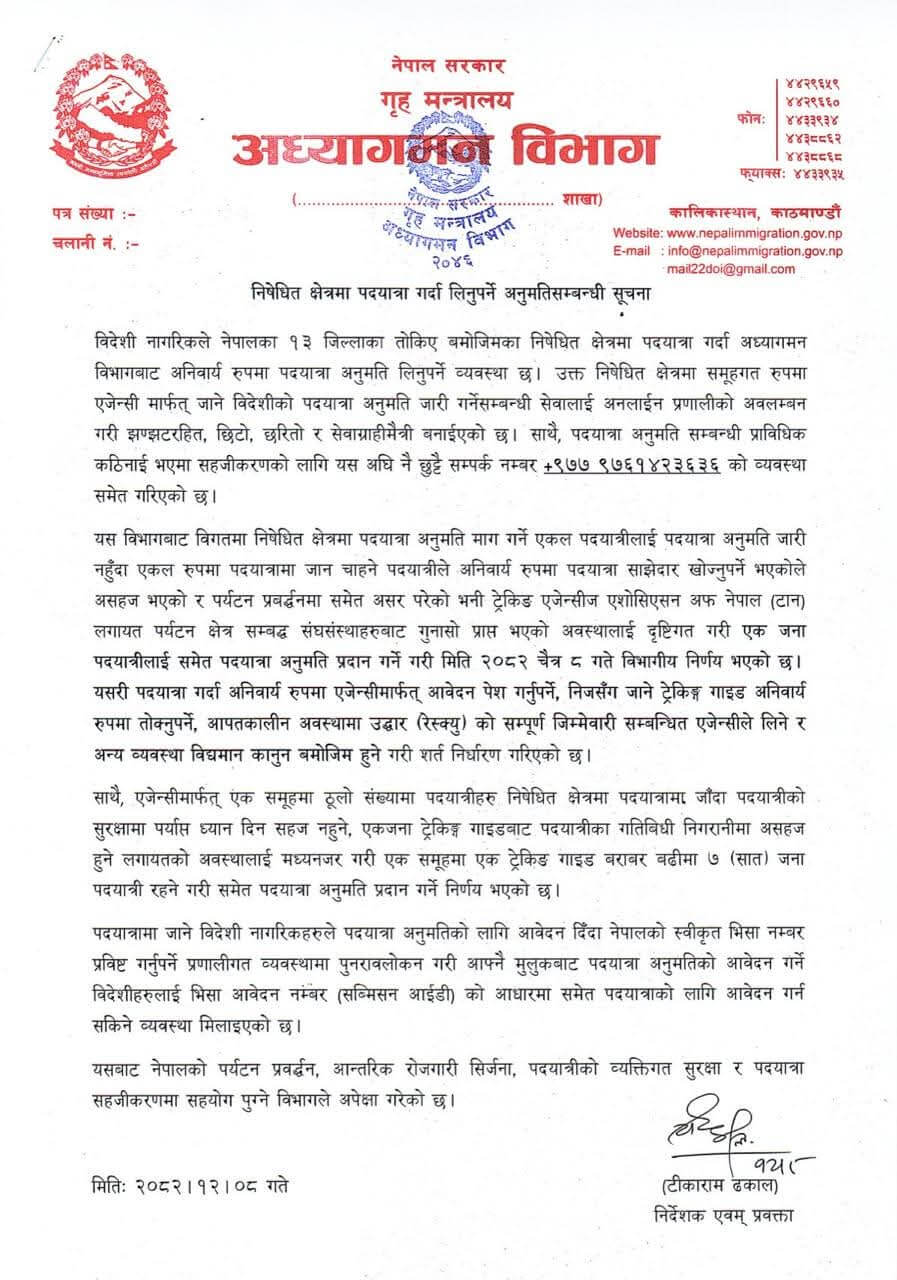
In 2026, Nepal introduced a small but important change to its restricted-area trekking rules. A solo traveler can now apply for a permit without needing to find another person. Earlier, this wasn’t possible. You had to be at least two trekkers. That rule created a lot of hassle for independent travelers.
Now it feels easier. You can apply on your own, and no partner is needed. It sounds simple, but it’s not exactly freedom to trek alone. The permit is just one step of the process. Even if you apply solo, you still have to go through a registered trekking agency, and a licensed guide must be with you during the entire journey. No guide means no trek in restricted areas.
It is like the door is now open for solo applicants, but the rules inside the room remain the same. The government made this change mainly to make permits more accessible for individuals who cannot find trekking partners. Still, safety, monitoring, and regulation remain a priority.
In simple words, Nepal has made it easier for individuals to enter restricted regions. But the structure of the trek is still controlled, organized, and guided.
What Changed in Restricted Area Trekking Rules?
The changes in restricted area trekking rules are not huge, but they do matter. Earlier, everything felt very strict. You couldn’t even think about entering these regions unless you had at least two trekkers with you.
Now that part has changed. A single traveler can apply for a Restricted Area Permit. No need to wait for a partner, no need to form a group just to meet the requirement. That alone makes things easier for many people who prefer traveling solo.
It sounds flexible, right? But only on paper. Once you go deeper, the rest of the rules are still there. You still cannot enter these areas independently. A registered trekking agency is required, and a licensed guide must accompany you throughout the trek. That part is non-negotiable.
So in reality, what changed is mostly the permit side of things. The government allowed individuals to apply alone, which reduces the dependency on group formation. But the trekking itself is still guided and still controlled.
Can You Actually Trek Alone in Restricted Areas?
This is the question most people ask, and honestly, the answer is not what many expect. You might think, “Solo permit is allowed now, so I can go alone.” It sounds logical. You get the permit in your name, you plan your trip, and you head off. But in reality, that’s not how it works on the ground.
Yes, you can apply as a solo traveler. But trekking completely alone in restricted areas is still not allowed. You cannot walk these regions independently without support. A licensed guide must accompany you from start to finish, and the trek must be arranged through a registered agency.
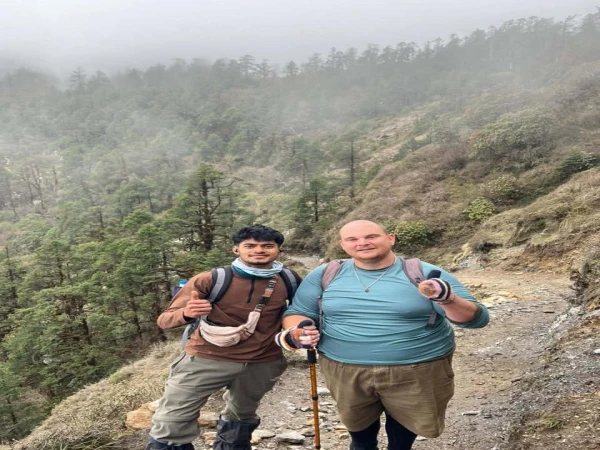
So, what happens in practice? You travel as a single client, but not as a solo trekker. There is still a guide with you, sometimes even a porter, depending on the arrangement. You follow an organized route, with permits and checkpoints managed through the agency.
It can feel a bit confusing at first. Solo permit, but not solo trekking. These are two different things. One is about application, and the other is about execution.
So the clear answer is, yes, you can travel as an individual. But you cannot explore restricted areas completely on your own without a guide and agency support.
What Rules Still Apply for Restricted Area Trekking?
Even with the new solo permit option, the core rules for restricted area trekking are still the same. The system didn’t become open or free. It just became easier at the permit level. So, when you actually plan a trek, the process still feels structured and a bit controlled.
First thing is that a licensed guide is still mandatory. Even if you are experienced, even if you’ve trekked many times before, this rule doesn’t change. The guide stays with you throughout the journey, helping with navigation and safety.
Then comes the agency part. You still need to go through a registered trekking agency. Permits are handled through them. They arrange the guide, manage documents, and organize the trek from start to finish.
Permits themselves are also required. These restricted area permits are checked at different points along the trail. Sometimes at entry checkpoints, sometimes in villages. If something is missing, the journey can get stopped. There is no exceptions there.
And one more thing, independent trekking is still not allowed in these regions. You cannot just plan everything on your own and head out freely. The itinerary is usually fixed or arranged in coordination with the agency.
So in the end, the rule update didn’t remove control. It only relaxed one part, i.e., the permit application. Everything else, the guiding, the agency system, the monitoring, all remains the same.
What Does This Mean for Solo Travelers?
At first, this rule feels like good news. And honestly, yes, it is in some ways. You don’t have to look for a trekking partner anymore, no waiting around, and no adjusting your plan just to match someone else. You can decide your own dates and just go. That part feels freeing.
But then reality hits a bit. You’re still not trekking alone. A guide will be with you the whole time. Everything is arranged through an agency. So the experience is still structured, not fully independent. And then comes the cost. Since you are traveling alone, there is no one to share expenses with. Guide fees, permits, and logistics all by yourself. So, it can get expensive, quickly. It’s more flexible now. It’s easier to start, but not exactly the solo adventure that many people imagine
Which Areas in Nepal Are Affected by This Rule?
This rule mainly applies to Nepal’s restricted trekking regions. Not in the usual trails like Everest Base Camp orAnnapurna Base Camp. These areas are different. They are more remote and more controlled. If you’re planning one of these, then this update matters.
Here are the key areas affected by these rules:
- Upper Mustang Trek: It sits around the Tibetan border. It consists of dry landscape and is desert-like. It feels very different from the rest of Nepal. Old caves, ancient villages, and their beauty hit different.
- Upper Dolpo: It is a very remote area. Not many trekkers go here. It includes long days of trekking and quiet trails. Here, you feel a bit cut off from the world, but in a good way.
- Nar Phu Valley: This place is hidden behind Annapurna. It is a small village with a strong traditional lifestyle. This village feels untouched, almost frozen in time.
- Tsum Valley: Tsum Valley is a spiritual place. It has monasteries, prayer flags, and a calm environment. You can actually feel the silence here.
These are the regions where the solo permit rule applies. If your trek is in one of these areas, then this update matters. If not, nothing really changes for you.
Why Did Nepal Introduce the Solo Permit Option?
This change didn’t come out of nowhere. For years, solo travelers faced one common problem. They wanted to go to restricted areas, but couldn’t find a partner. Sometimes they waited for a day. Sometimes they just gave up. The plans dropped, and the trips were cancelled. It happened more often than people think.
That minimum two-person rule was blocking a lot of potential visitors. So, Nepal had to adjust. Not to remove the system, but to make it a bit more flexible. Tourism is a big part of the economy. And restricted areas like Upper Mustang or Dolpo depend on it, even if in smaller numbers. When solo travelers can’t enter, that means a loss in business.
This new option solves that problem. Now, even if you are traveling alone, you can still access these regions. No need to depend on strangers or fixed groups. But at the same time, the government didn’t want to compromise on safety. These are remote areas with limited infrastructure and difficult terrain. So, the guide and agency rules remain the same.
Planning a Restricted Area Trek in Nepal?
So, if you’re thinking about trekking in a restricted area in Nepal, now is the time to consider places like Upper Mustang or Upper Dolpo. These places will stay in your head once you see them.
But planning here is not like normal trekking. It’s a bit more structured. First thing, you need a registered agency. That’s where everything starts. Permits, guides, itinerary, and all other things are handled through them.
Then comes the guide. It is mandatory for these regions. You’ll be trekking with them the whole time. At first, it may feel restrictive, but honestly, in these remote areas, it helps more than you expect.
Permits are another part. Restricted Area Permit, sometimes additional ones too, depending on the region. These perits get checked along the trail. So everything has to be proper, and no shortcuts.
Timing matters too. Weather, road conditions, and flight delays are not always predictable in these regions. You need a bit of flexibility in your plan. Not everything goes exactly as scheduled.
If you’re going solo, expect a higher cost. There is no one to share with. But also more control over your pace and experience. So yeah, planning is slightly more effort in these areas, but once you’re there, walking through those landscapes makes sense why it’s all controlled.
Final Answer: Is Solo Trekking in Nepal Allowed Now?
No, not really. It might sound like we can trek solo because a solo permit is now allowed, and you can apply alone. But when it comes to the actual trekking, things are different. You still cannot trek completely alone in restricted areas. A guide is mandatory, an agency is required, and the route is organized. So, even if you start the journey solo, you’re not really alone on the trail. There’s always a guide with you.
So, if you’re imagining a fully independent adventure in places like Upper Mustang or Upper Dolpo, that’s still not allowed. But if your idea of solo travel is going as an individual, with your own plan, your own pace, just with a guide beside you, then yes, that’s possible now. So yeah, rules are a bit relaxed but freedom is still limited.