
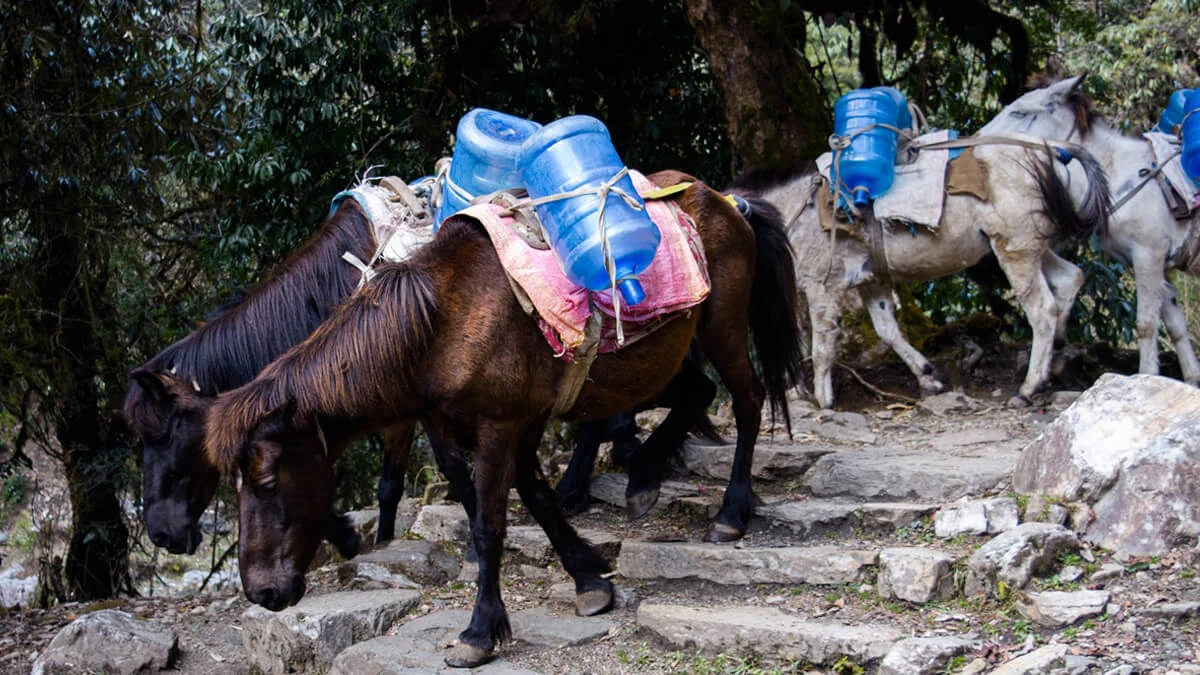
Ghorepani Poon Hill Sunrise Trek

Ghorepani Poon Hill Sunrise Trek
Quick Overview
Duration6 Days
Trip GradeModerate
CountryNepal
Maximum Altitude3,210 meters
Group Size1-20
StartsKathmandu
EndsPokhara
ActivitiesTrekking
Best TimeAutumn and Spring

Highlights of Ghorepani Poon Hill Sunrise Trek

  • Magnificent sunrise view from Poon Hill (3210m)
  • Clear views of the Himalayas, including Annapurna I, II, III, Dhaulagiri, Tukuche Peak, Nilgiri, and Hiunchuli.
  • Cultural experience with Gurung and Thakali communities and enjoy the traditional cuisine.
  • Explore the traditional villages like Ghandruk.
  • Walk through rhododendron forests and scenic landscapes. 
  • Explore Pokhara City, the city of Lakes.

Overview of Ghore pani Poon Hill Sunrise Trek

The Ghorepani Poon Hill Trek is one of those treks people hear about again and again when they plan to trek in Nepal. It is short, scenic, and not too hard, but it still feels like a proper Himalayan journey.

This trek lies in the Annapurna region and leads toward Poon Hill. You’ll walk uphill on a quiet trail. Slowly, the sky begins to change. That moment at the top of Poon Hill stays with you forever. 

Poon Hill trek is easy to moderate. But some uphill sections can test your legs a bit, especially the stone steps. You’ll walk, take breaks, and continue at your own pace. Nothing is too technical, just a steady effort is needed. 

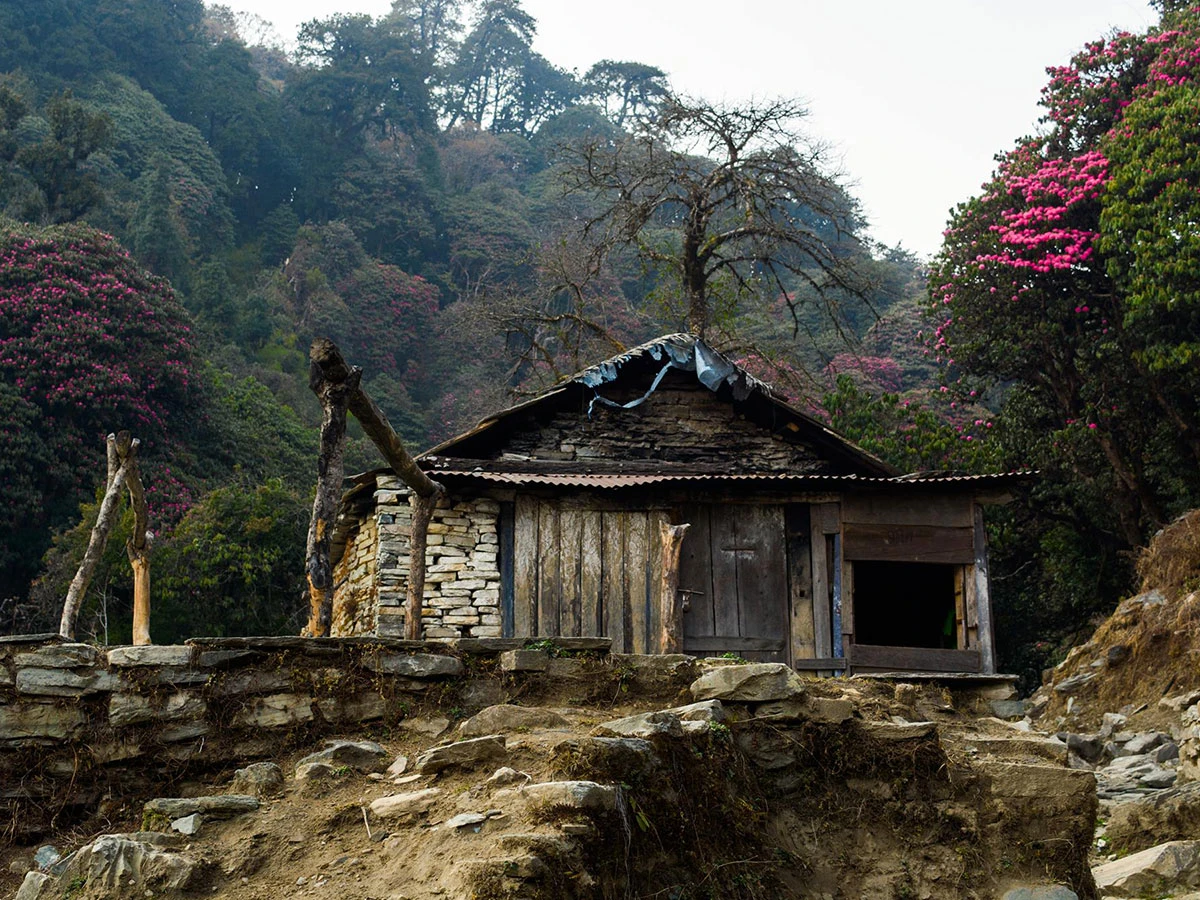
On the way, the trail passes through forests, small villages, and terraced fields. The weather is sometimes foggy, sometimes clear. You’ll also see rhododendrons if the season is right. Tea houses appear along the route, simple and warm. You’ll stop, drink tea, talk a little, and continue again.

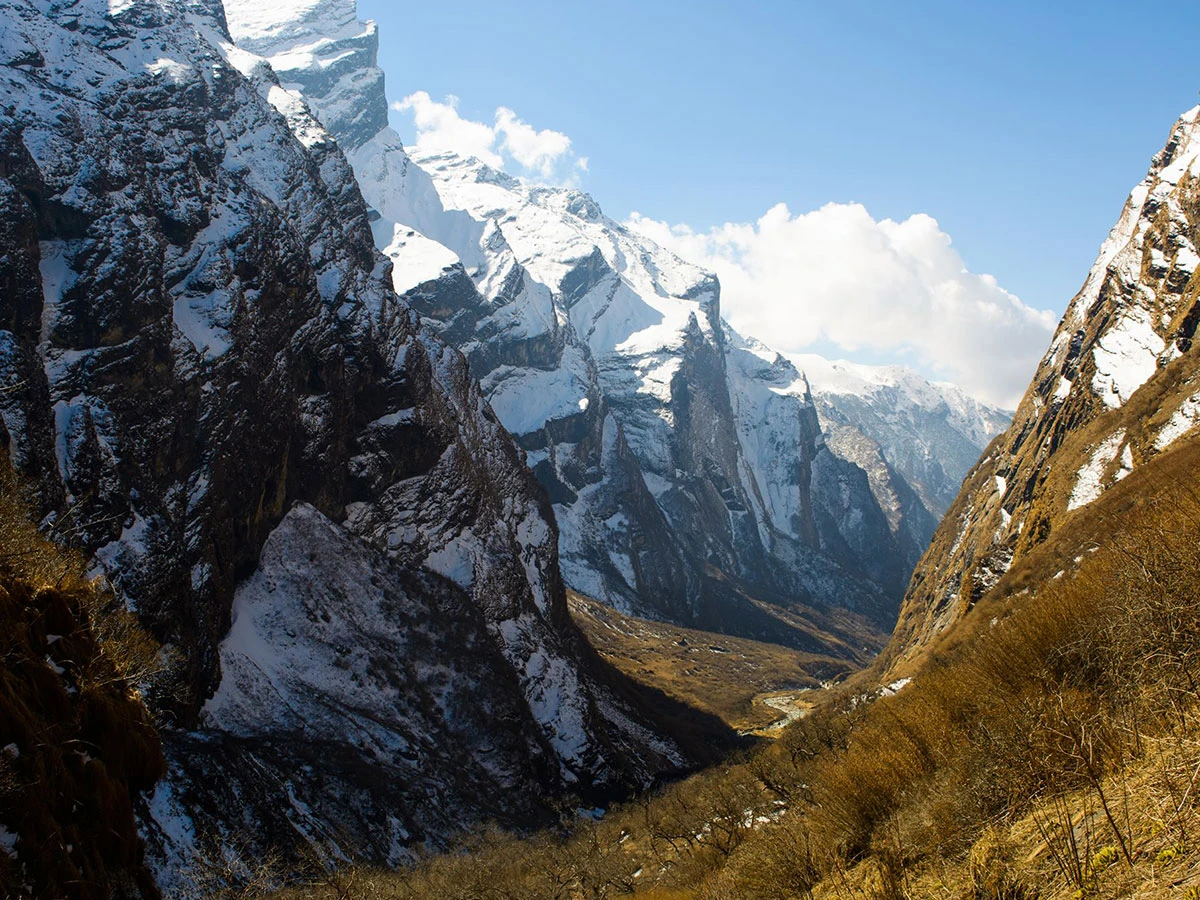
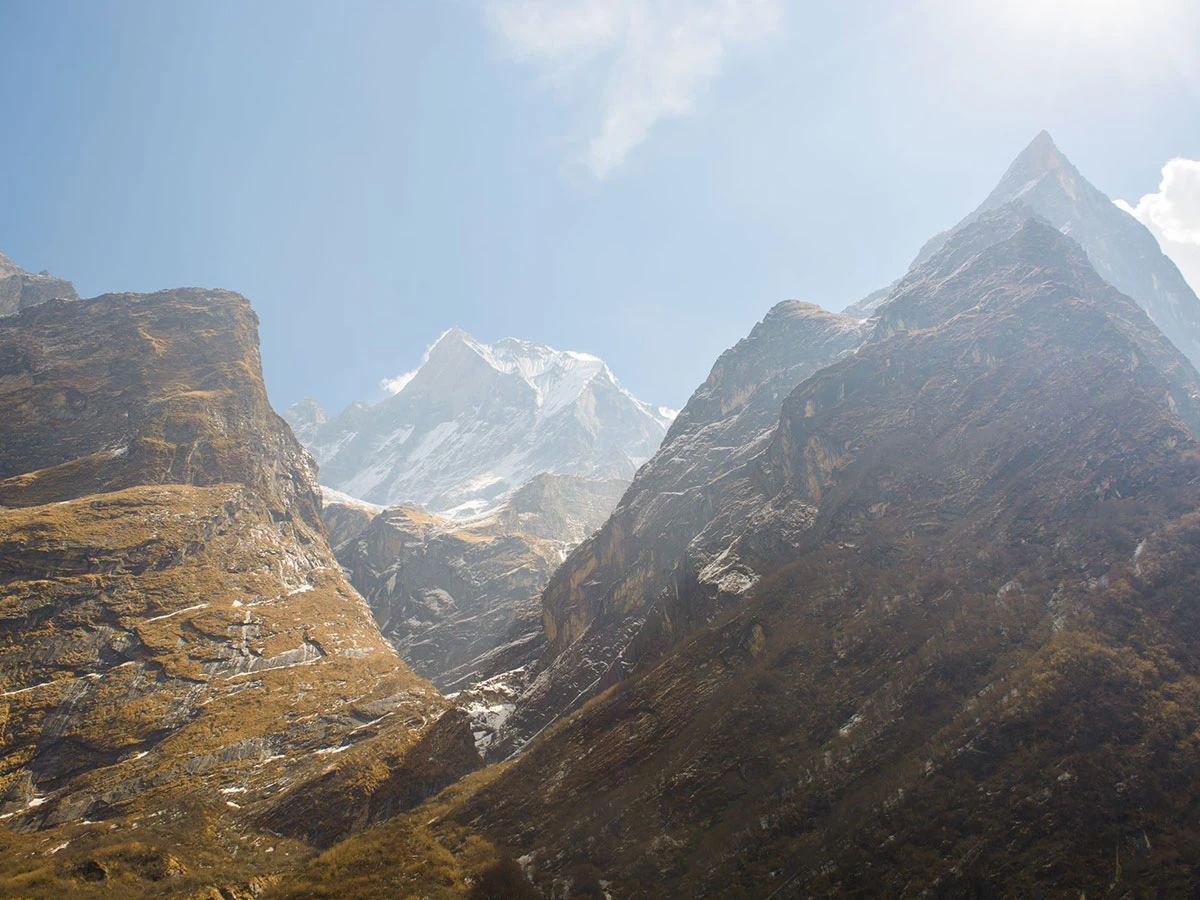
The main highlight of the Ghorepani Poon Hill trek is the sunrise view. From the viewpoint, you see Annapurna I, Annapurna South, Dhaulagiri, Machhapuchhre, Hiunchuli, Nilgiri, and several other peaks. When the sun rises, the light slowly touches the mountains. The mountain turns golden and bright, and the whole scene feels calm and quiet. 

The trek also passes through traditional Gurung villages like Ghandruk. You don’t just pass by these places. You notice how people live, how they greet, how daily life moves in these hills. The journey is short, but each section feels slightly different. 

In the end, it’s not only about the destination. It’s about the walk, the small moments on the trail, and the overall experience that stays with you long after the trek is over.

Why Should You Choose Ghorepani Poon  Hill Trek? 

The Ghorepani Poon Hill trek is not long in Nepal. It is not the toughest either. But still, it gives a full Himalayan experience in a short time. That’s why many people choose it. It is a good option if you don’t have many days, or even if it’s your first trek. The trail is straightforward, and no technical climbing is needed. Some uphill sections will slow you down a bit, especially the stone steps. 

The main reason people come here is the sunrise from Poon Hill. Early morning, before the sun rises, you’ll walk in the dark and quiet trail. When you reach the top, you wait. Then slowly, the sky starts changing. Peaks like Annapurna, Dhaulagiri, Machhapuchhre, Hiunchuli, and Nilgiri begin to appear brighter. In the golden light of sunrise, it looks even more beautiful.

Along the trail, you also pass through villages like Ghandruk. Small houses. Local people living simple lives. You’ll stop sometimes, have tea, maybe talk with locals. It’s not rushed. You just observe things as they are.

The path itself keeps changing to forest sections, stone steps, and open views. Some parts are quiet and shaded, some are wide and open. Rhododendron trees appear in certain seasons. Tea houses are available along the way. You’ll walk, rest, and move on. That’s how the day goes.

Another reason to choose the Ghorepani Poon Hill trek is accessibility. The trek starts from Pokhara. This trek is easy to reach from Kathmandu. There is no complicated travel. Everything feels manageable from the start.

People don’t choose this trek for difficulty. They choose it for the short duration, moderate walking, clear mountain views, and a sunrise that somehow stays in memory longer than expected.
Ghorepani Poon Hill Sunrise Trek Itinerary

Trip PlanExpand all
  • Drive Duration: 6-8 hours / Flight: 25 minutes
  • Distance: ~200 km (by road)

On the first day of Ghorepani Poon Hill Sunrise Trek, we will kick off our trip from Kathmandu to Pokhara with a drive. We get on an amazing journey from Kathmandu to Pokhara through the lovely Dhading and Tanahun Districts. You can opt for either an early morning road trip or a flight from Tribhuvan International Airport. After arrival in Pokhara we will check in to our respective hotels. You can also join the sightseeing activities around the beautiful Phewa Lake where you will have a perfect view of the majestic Annapurna ranges.

Besides, you can also invest some of your afternoons in visiting and having lunch at the colorful Lakeside, where you can also get the serenity of the setting. In the end, let the sun go down behind the mountains as you are on a boat sailing slowly and admiring a wonderful scene.

Max Altitude: 822 m Meals: Lunch and DinnerAccommodation: Hotel
  • Drive Duration: 3-4 hours
  • Distance: ~40-50 km

The day starts with an excellent breakfast in Pokhara, and then we will be ready for the ride to Nayapul, which is the starting point of the Ghorepani Poon Hill sunrise trek. It will take approximately 2.5 hours to get to Ulleri. We will drive through forests, catching the great Himalayan vistas, including Annapurnas, Machhapuchhare, Dhaulagiri and Hiunchuli peaks. On arrival at Ulleri, we shall call it a day and spend the night there.

Max Altitude: 2,050 m Meals: Breakfast, Lunch, and DinnerAccommodation: Tea House
  • Walk Duration: 4-5 hours
  • Distance: ~9-10 km

The next destination will be Ghorepani, one of the most famous villages of all time in Nepal; its residents are mainly Thakali and Gurung. Through the forests full of trees, we will get to Nangthanti first at 2460m above sea level.

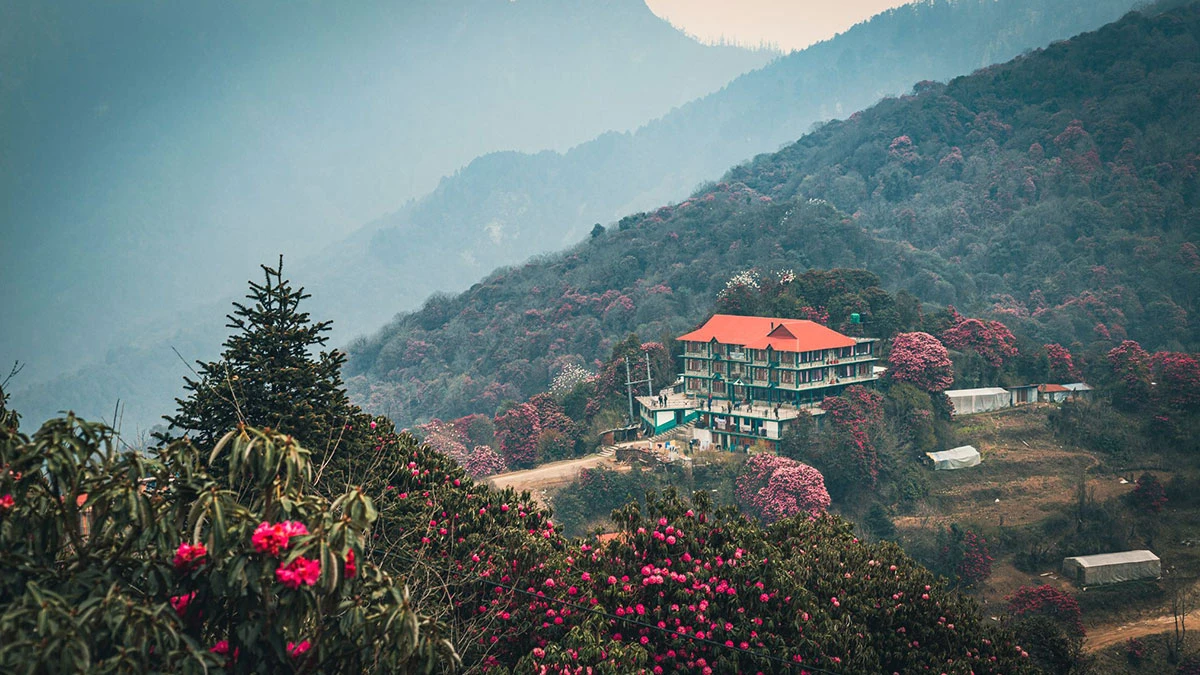
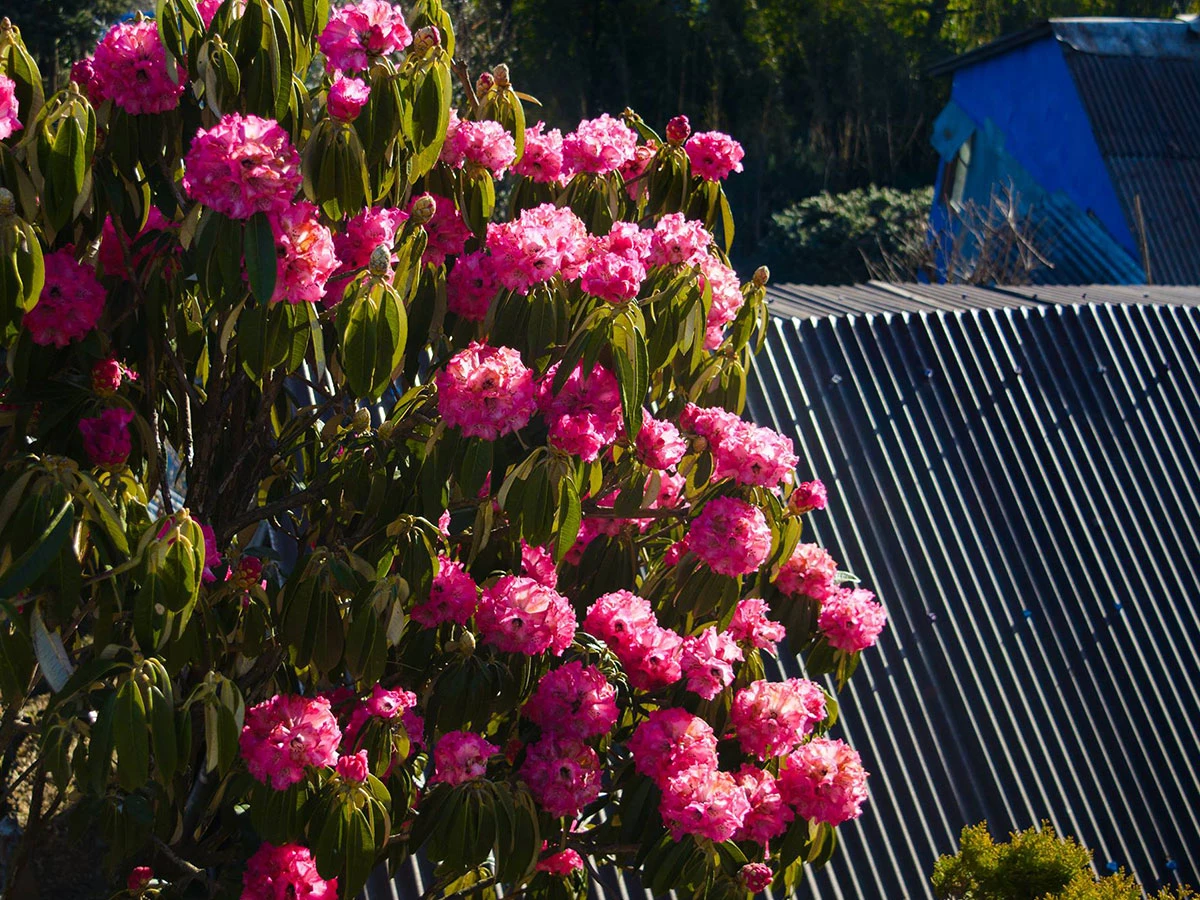
There, you'll have a nice view of Annapurna Massif and Dhaulagiri. The hillside below Ghorepani is also popular for its diverse ecosystem, with rhododendrons being the dominant species. These rhododendrons will be in full bloom. We will sleep at Ghorepani tonight, eating typical Nepalese food and Thakali dishes.

Max Altitude: 2,850 m Meals: Breakfast, Lunch, and DinnerAccommodation: Tea House
  • Walk Duration: 6-7 hours (including sunrise hike)
  • Distance: ~12-14 km

Today, we will begin our walk early from Ghorepani and move on to Poon Hill for a sunrise view. Poon Hill is an eminent sightseeing point that provides spectacular sights of the Himalayas, such as Annapurna I, II, III, Dhaulagiri, Hiunchuli, Nilgiri, Tukuche and many more. We will be back at the tea house for breakfast after detailed exploration and sightseeing, then trek to Deurali.

The way forward is to Banthanti and Bhurung Khola before finally arriving in Tadapani. Having walked through the deep forests of rhododendrons, we eventually get to Ghandruk, a prominent Gurung village on Annapurna Trail, where we stay overnight.

Max Altitude: 3,210 m (Poon Hill), 1,940 m (Ghandruk) Meals: Breakfast, Lunch, and DinnerAccommodation: Tea House
  • Walk Duration: 5-6 hours
  • Distance: ~10-12 km

The day starts slowly. Morning in Ghandruk feels calm. It is a quiet village with mountain views around. The trail moves away from the busy route. Fewer trekkers are around. You’ll walk through forests, small paths, and open sections here and there. Some ups, some downs, but nothing is too hard, just steady walking is needed.

Along the way, you pass a few small settlements. Simple houses, local life is going on as usual. You might stop for tea, take a short break, then continue again. By afternoon, you reach Pitam Deurali. A quiet stop compared to earlier days. Fewer people. More silence. Good place to rest and just slow down a bit.

Max Altitude: ~2,100 m Meals: Breakfast, Lunch, and DinnerAccommodation: Tea House
  • Walk Duration: 2-3 hours
  • Drive Duration: 2-3 hours
  • Distance: ~6-8 km (walk) + ~40-50 km (drive)

This is the last day of your trek. This day feels a bit different. You start your trek with a short walk from Pitam Deurali. The trail is easier now with a gradual descent and familiar surroundings. 

After reaching the road point, you take a drive back to Pokhara. The trek slowly comes to an end. After being back in Pokhara, everything feels comfortable again. Good food, warm shower, proper rest. But part of your mind is still on the trail. The quiet mornings, the walk, and that sunrise stay in your mind for a while.

Max Altitude: 822 m Meals: Breakfast and Lunch
Couldn't find what you're after?Reach out to our travel experts.
Customize Trip

Cost Details

Includes

Transportation

  • Airport pick-up and drop-off (if applicable)
  • Kathmandu to Pokhara transport in a tourist bus
  • Pokhara to the trekking starting/ending point transfers in a jeep

Accommodation

  • Hotel in Pokhara (before trek)
  • Teahouse accommodation during the trek (twin sharing)

Meals

  • Full board meals

Permits & Documentation

  • Annapurna Conservation Area Permit (ACAP)
  • TIMS Card

Guide & Staff

  • Licensed trekking guide
  • Guide’s salary, insurance, food, and accommodation

Trekking Support

  • First aid kit carried by the guide
  • Trekking map/route guidance
  • Basic trip management and assistance

Excludes

  • International airfare to and from Nepal
  • Nepal visa fees
  • Travel insurance (mandatory for trekking)
  • Personal trekking gear and clothing
  • Extra accommodation in Kathmandu or Pokhara beyond the itinerary
  • Tips for the guide and porter
  • Personal expenses (laundry, phone calls, internet, snacks)
  • Emergency evacuation or helicopter rescue (if needed)

Essential Information

Ghorepani Poon Hill Trek Difficulty

The Ghorepani Poon Hill Trek is generally considered an easy-to-moderate trek in Nepal. No technical climbs or ropes are needed. Just normal walking is enough.

But still, this trek is not completely effortless. There are uphill sections and long stone staircases in some parts. You can feel it in your legs. You need to slow down, take breaks, and then continue again. That’s the rhythm of the trail.

The highest point of the Poon Hill trek is around 3210 meters. At this altitude, some people may feel a bit short of breath or mild tiredness.This is not serious usually, but your pace becomes important here. You should not rush, but walk slowly. 

Daily walking is around 4 to 6 hours. This is not too long and not too short. You’ll pass through forests, villages, and gradual climbs. The trail is well marked, and tea houses are available along the way. So you can stop, rest, drink tea, and move on.

Basic to moderate fitness is enough for the Ghorepani Poon Hill trek. If you can walk for a few hours a day, you’re good. Even first-time trekkers complete this route without much issue. Some struggle a bit on uphill parts, but that’s normal.

This trek is more about consistency than strength. You don’t need to be super fit. Just a bit of patience helps. And if you go with a calm pace, the trek feels much easier than expected.

Best Time for Ghorepani Poon Hill Trek

The Ghorepani Poon Hill Trek can be done almost anytime. But the experience changes with seasons. Some days feel clear and bright, while some feel quiet and a bit misty. Timing matters while trekking in Nepal. 

  • Spring (March to May): Spring feels fresh on the trail. The weather stays stable, not too hot, not too cold. Rhododendrons start blooming everywhere on the trail. Skies are mostly clear, and views from Poon Hill look sharp. It is a comfortable season, and many people choose this time.
  • Autumn (September to November): Autumn is the most preferred season. The air feels clean after the rains. Skies are clear most of the days. Trails stay dry and are easy to walk. Sunrise views are strong here, and the mountains look close and bright. It is a bit crowded sometimes, but it is worth it.
  • Winter (December to February): Winter gets cold, especially in the mornings and nights. You’ll feel it properly. Trails are quiet, though, fewer trekkers are around. On clear days, the views are really nice. Just warm clothes are important. 
  • Monsoon (June to August): The monsoon season is often wet and rainy. Trails get muddy and a bit slippery. Clouds hide the mountains most of the time. But the greenery is different. Forests look alive, fresh. It is not the best season, but still doable if you’re okay with the rain.

The spring and autumn seasons feel the most balanced. Better weather, clearer views, and easier walking. That’s why most people go during these months.

Permits Required During Ghorepani Poon Hill Trek

Before starting the Ghorepani Poon Hill Trek, you’ll need a couple of permits. Nothing is too complicated, but yes, they are required. Without them, entry is not allowed. Both permits are arranged by us, so without any worries, you can enjoy your trek fully.

  • Annapurna Conservation Area Permit (ACAP): This is required because the trek lies inside the Annapurna Conservation Area. It helps in protecting nature and managing the region. You’ll need to carry it during the trek, as it is checked at different checkpoints.
  • TIMS Card (Trekkers’ Information Management System): This is mainly for safety purposes. It helps authorities keep track of trekkers in the region. In case of an emergency, it becomes useful.

Accommodation and Food During the Trek

During the Ghorepani Poon Hill Trek, accommodation is simple. It is not luxury, but comfortable enough after a long day of walking. You’ll stay in teahouses along the trail. Rooms are basic, usually twin-sharing. Rooms have beds, blankets, and sometimes a small table. In places like Ghandruk or Ghorepani, some teahouses are slightly better, with attached bathrooms. But in most places it is simple but comfortable. 

Food during the Ghorpani Poon Hilltrek is simple, but it is tasty and filling. You’ll find a mix of local and basic international meals.

  • Dal Bhat (rice, lentils, vegetables) is the most common
  • Noodles, fried rice, soups
  • Eggs, toast, and pancakes for breakfast
  • Tea, coffee, and hot drinks are available almost everywhere

Meals are freshly prepared. They are not fancy, but warm and enough to keep you going. You eat, rest, and move again. As you go higher, options become a bit limited. Prices also increase slightly due to transport difficulty. Still, you won’t go hungry.

The food and accommodation on this trek are simple but reliable. Not about comfort, more about experience. And somehow, after a long walk, even simple food tastes really good.

Packing List for Ghorepani Poon Hill Trek

Here is the important packing list for the Ghorepani Poon Hill Sunrise Trek that you should not miss:

  • Moisture-wicking t-shirts, thermal tops, and bottoms
  • Fleece jacket or pullover
  • Down jacket (waterproof and windproof)
  • Waterproof pants and trekking pants
  • Warm hat and gloves
  • Trekking boots (waterproof, good ankle support)
  • Wool or synthetic socks
  • Backpack (30-40L with rain cover)
  • Sleeping bag (-10°C to 0°C)
  • Trekking poles
  • Water bottles
  • Water purification tablets or a filter
  • Basic first aid kit
  • Sunscreen and lip balm
  • Sunglasses (UV protection)
  • Headlamp or flashlight
  • Power bank
  • Toiletries and personal hygiene items
  • Trekking map or guidebook
  • TIMS card
  • ACAP permit

Ghorepani Poon Hill Sunrise Trek FAQs

The trek takes anywhere between 4 and 5 days to accomplish fully. The duration may include the period it will take to complete the trip, depending on the pace, the route, or the time spent in various attractions along the journey.

The best time to trek to Poon Hill is during the pre-monsoon season but the most favorable time for trekking in the Annapurna region is in Spring from March to May and Post monsoon from September to November.

The trek varies in length between 4 and 5 days. This will mostly depend on the pace, the route that is chosen, or how much time is spent at various attractions along the journey.

The most appropriate period for going to Poon Hill is before the arrival of monsoon. However, the best seasons for trekking in the Annapurna region are Spring (March to May) and post-monsoon (September to November).

One can call the Ghorepani Poon Hill Trekking a moderate trek, and by no means do you have to be an ace trekker or in super good physical condition. The trek includes 4-6 hours of steep walking every day on moderately worn trails, yet it won’t force you to climb any mountains.

For the Ghorepani Poon Hill Trek you will need two permits: The ACAP and TIMS Card are the two main permits, which every trekker who intends to hike in Annapurna region must have. Those can be bought with the help of your guide in Kathmandu or Pokhara.

The trek often starts from Nayapul, which is about 1.5 hours driving distance from Pokhara.

In this trek the acute mountain sickness is not very much a problem since the highest altitude that has to be reached is Poon Hill which is at 3,210 meters (5,318 feet). However, you must take good care of your health and prepare well in advance.