Permits & Documents Required for the Everest Base Camp Group Trek
When you join the Everest Base Camp Group Trek with us, you don't have to chase permits yourself. We handle it. Here's what you actually need for the EBC trek:
- Sagarmatha National Park Entry Permit: It is needed because the trail passes through the national park.
- Khumbu Pasang Lhamu Rural Municipality Permit: It is a local permit for this specific route.
- Passport copies: We ask for these before departure, because they are needed for permit processing and Lukla flights.
- Passport-sized photos: Photos are needed for permit paperwork. It’s a small thing, but easy to forget, so we remind everyone before the trek starts.
Photo Spots You Shouldn't Miss on the Everest Base Camp Route
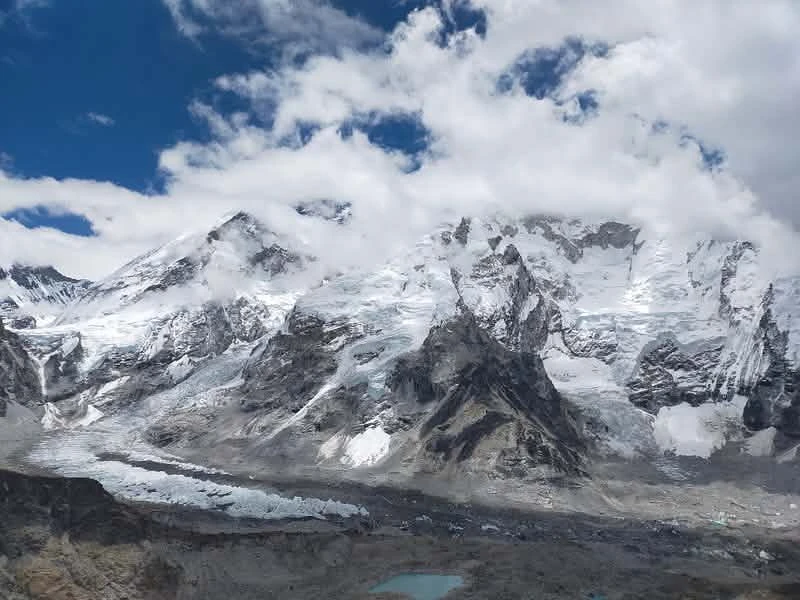
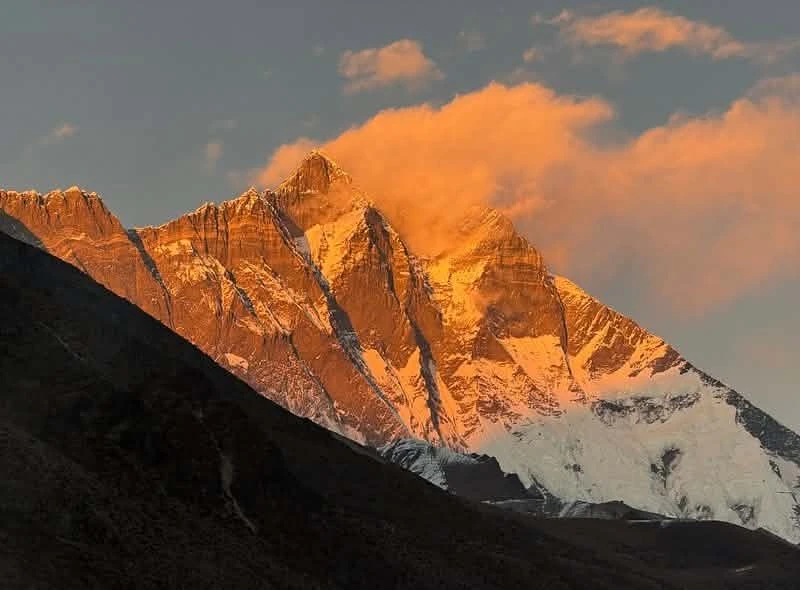
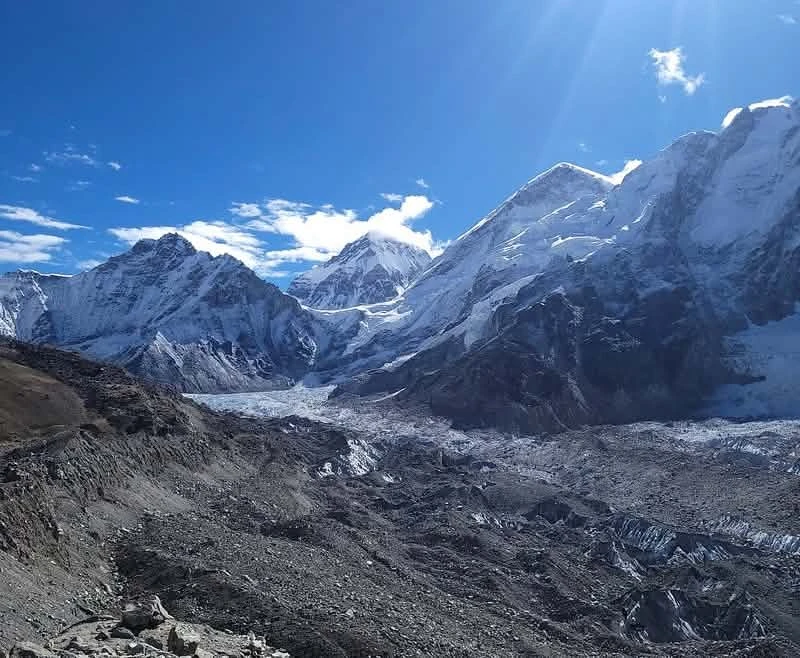
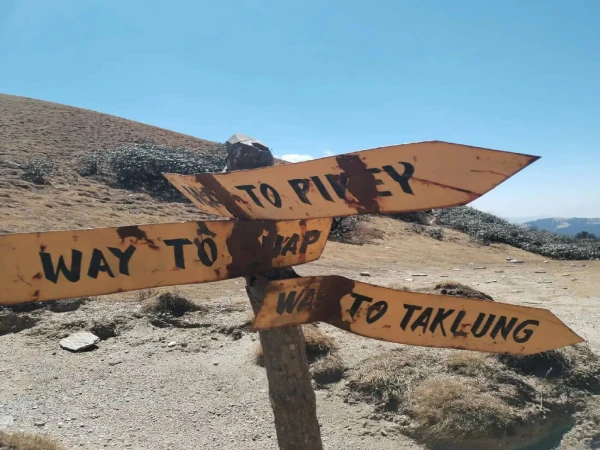
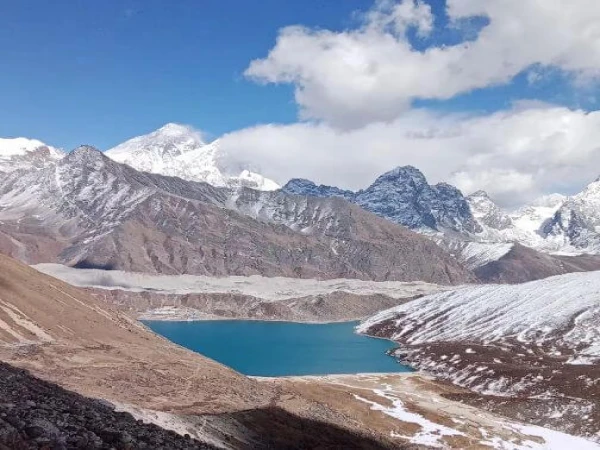
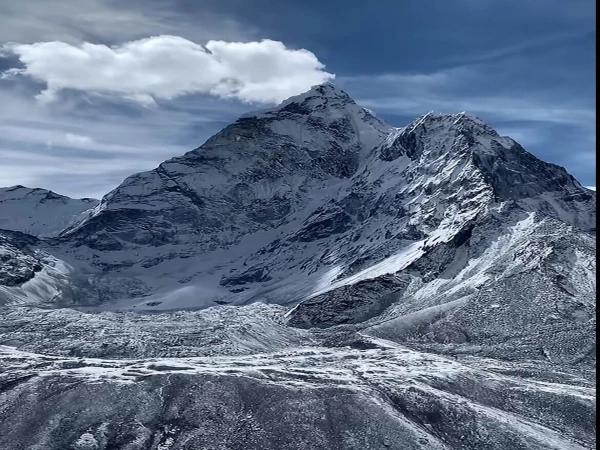
Every spot on the Everest Base Camp feels photogenic. If you love taking pictures, your camera roll is going to be as full as your heart after this trek. Every day brings a new view, and some places are so stunning that you cannot stop yourself from taking photos.
Here's where you'll want to stop, breathe, and just take a picture of:
- Lukla Airport: This is the starting point of our trek. The moment you reach here, you’ll see green hills, a tiny runway, small mountain villages, and the trail that leads you towards the mountain. It is your first "wow, we're actually doing this" photo.
- Namche Bazaar viewpoint: The climb to Namche Bazaar Viewpoint is worth every step. On a clear day, you’ll catch your first glimpse of Mount Everest along with Lhotse and Ama Dablam. Most trekkers stop here for photos because it’s the moment when the dream of Everest starts to feel real.
- Everest View Hotel, Syangboche: This is the spot that gives you the first look at Everest. This place is definitely group photo material.
- Tengboche Monastery: It is a famous Monastery, where the mountains are behind and the prayer flags in front. This is one of the most photographed monasteries in the whole Khumbu region.
- Dudh Koshi suspension bridges: Crossing the bridge can feel a little scary, but the views make it worth it. From the middle of the bridge, you can take beautiful photos of the river below and the mountains all around.
- Dingboche farm terraces: The stone-walled fields with the Himalayas in the background make a perfect spot for a photo. It is quiet, simple, and one of the most peaceful places on the trek.
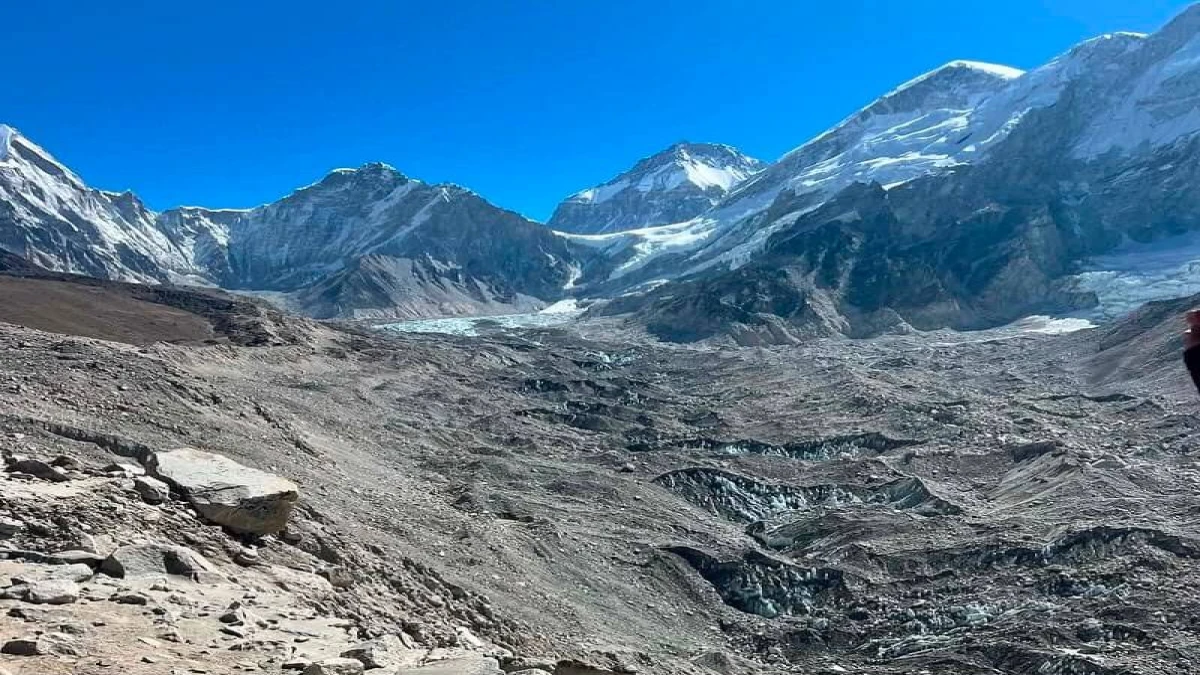
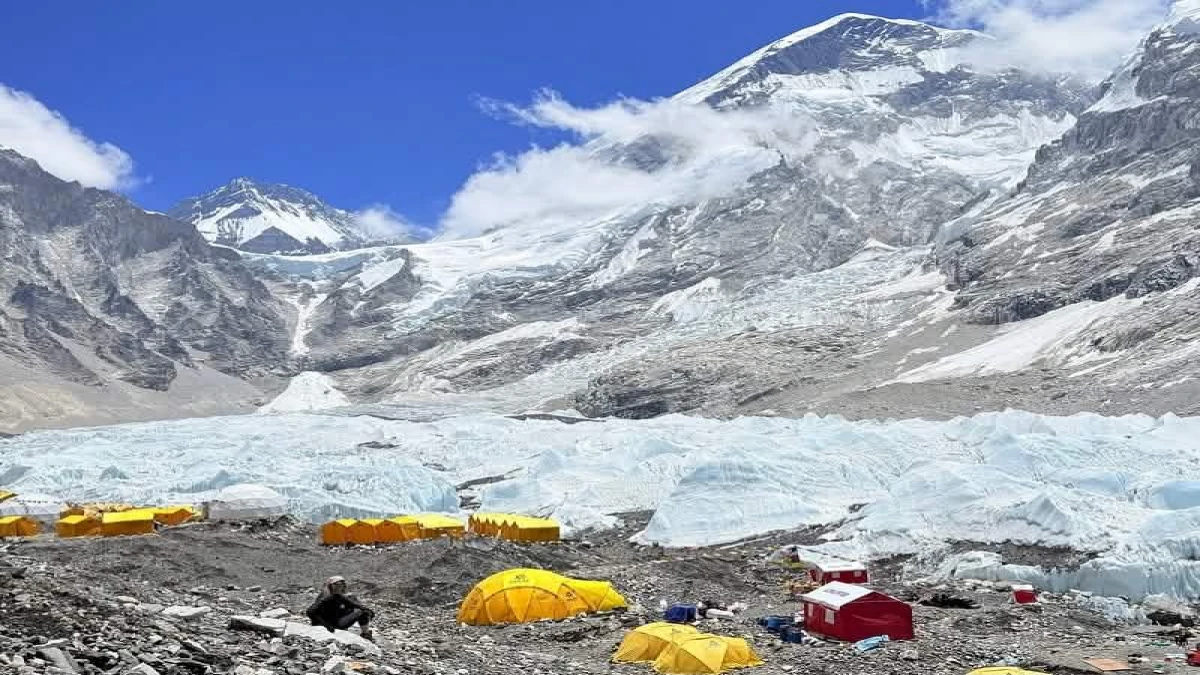
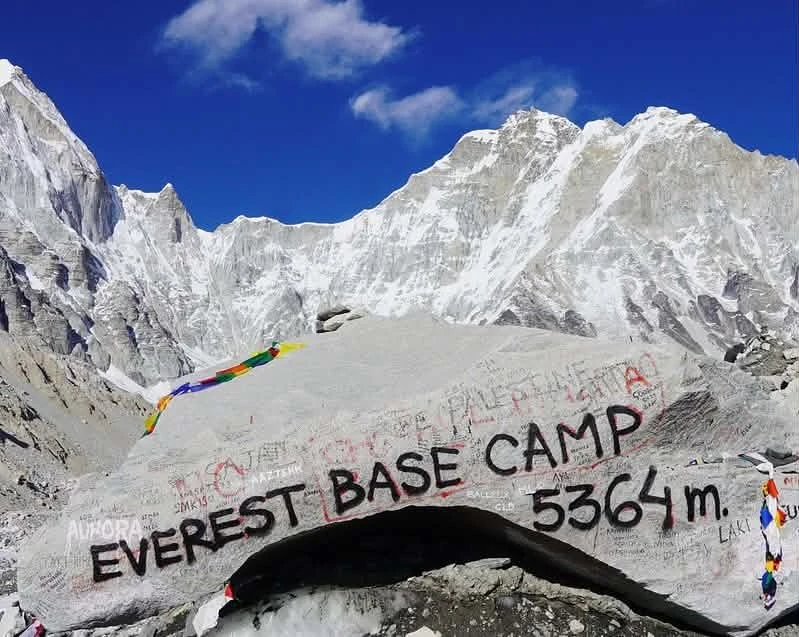
- Everest Base Camp itself: Standing at EBC is a special moment. You’ll definitely want to capture this moment. The Khumbu Icefall right there, prayer flags are fluttering, and your whole group is posing with the famous rock. It is a memory you'll always want to share.
- Kala Patthar at sunrise: As the sun rises, the Everest glows in a golden sunrise. Even if it is very cold, everyone smiles and takes photos together.
A little tip we always share with our groups, don't just rush to these spots. Everyone wants their solo shot and the group shot both, so our guide will usually give you enough time to enjoy the place and take pictures.
That's the beauty of an Everest Base Camp Group Joining Trek. You're not just capturing mountains. You're making memories with your group at every unforgettable stop along the way.
Accommodation and Meals During the Everest Base Camp Group Trek
Let's talk about where you'll sleep and what you'll eat on the EBC trek, because that really matters.
Accommodation During the Everest Base Camp Group Trek
You'll stay in local teahouses. That's your home for two weeks. The rooms are simple and usually twin-sharing. Nothing is fancy, but it’s warm enough after a long day of walking. Lower down, in Phakding or Namche, rooms are comfy with attached bathrooms, and you’ll also get hot showers with a small fee. Higher up, past Dingboche, the accommodation starts getting simpler.
When you join Everest Base Camp Group treks with us, rooms are shared, matched within your group. Solo trekkers get paired up too. So nobody pays extra, and nobody's alone either. If you want a private room, that's also possible, but with an additional cost.
Foods during the Everest Base Camp Group Trek
Food on the Everest Base Camp trail is simple. For breakfast, you’ll get options like porridge, toast, eggs, and tea. For lunch and dinner, you’ll get rice, lentils, veggies, and sometimes meat too. Other options like Noodles, soups, momos, etc are also available. Everyone eats together, at the same table, and at the same time. Honestly, this is where the real bonding happens.
The food gets simpler higher up. You’ll get less variety and fewer veggies, since porters or yaks carry everything up. That's what an Everest Base Camp Trek really means. Simple food and nothing’s fancy.
Fixed Departure Dates and Group Availability on Everest Base Camp Group Trek for 2026 & 2027
Our Everest Base Camp Group Joining Trek runs on fixed departure dates throughout the trekking seasons in 2026 & 2027. We set the dates and months. You can choose the departure that suits your schedule.
We run departures almost every month in trekking season. Mostly spring and autumn, since the weather is actually good then. We also run a few in winter and monsoon too, for those who want a quieter vibe. The Group size also stays small. Usually 2 to 15 people.
So, if you want to join Everest Base Camp Group departures, book early. October fills up fast. If your preferred date is already full, you don’t have to stress because we usually shift you to the next open departure.
This is also why Fixed Departure on Everest Base Camp Group Trek works so well. Fixed dates mean shared costs and shared logistics. And the price won't suddenly jump just because not enough people joined.
It’s an easy departure idea for beginners and solo trekkers. So, pick a date, show up, and we’ll handle the rest.
How Difficult Is the Everest Base Camp Group Trek?
The Everest Base Camp Group Joining trek is challenging, but it’s not a technical climbing expedition. Most days, you walk five to seven hours uphill, downhill, and on rocky trails.
The real challenge of the EBC trek isn't distance, it's altitude. The Base Camp sits at 5,364 meters, and Kala Patthar goes even higher. Air gets thin up there, and your body needs time to adjust. Honestly, altitude makes it harder than walking.
For the trek, you just need to be reasonably fit and comfortable to walk a few hours. A bit of training before you go helps too. Train on stairs, hikes, and some cardio. You can do whatever makes your legs and lungs ready.
When you join an Everest Base Camp Group trek, the guides watch the walking speeds of everyone closely. Slower trekkers aren't rushed, faster ones aren't held back either. Everyone regroups at checkpoints or tea houses before moving on together.
Mild altitude symptoms like headache, low appetite, and trouble sleeping are pretty normal. Most people feel it. Guides check you daily, and if the symptoms look serious, the plans get adjusted.
This is exactly why an Everest Base Camp Group Joining Trek works so well for first-timers too. You're not figuring out difficulty alone. There's a whole group, and a guide, watching out for you, every single day.
Our Acclimatization Strategy for Group Joining Trek to Everest Base Camp
Altitude on the Everest Base Camp Trek doesn't care how fit you are. So, we’ve built enough rest days on this group joining trek. We’ve two rest days, one in Namche, and another in Dingboche. But a rest day doesn’t mean a lazy day. You go up for short hikes or exploration around.
Everyone in the group follows the same schedule. Skipping the acclimatization means you’re getting in trouble. Altitude doesn't care about fitness level. Everyone acclimatizes the same slow way.
Our guides check on the group daily. Ask you how your sleep was, if you have any headaches, and if you're feeling okay or not. They catch the symptoms early, mild symptoms are normal, and yes, most people get a bit of a headache or lose their appetite.
If someone's not doing well, the plans shift fast. You need extra rest, more fluids, and sometimes need a short descent if things don't improve. Guides carry basic medical kits too, and they know the signs of serious altitude sickness, not just the mild one.
When you join an Everest Base Camp Group trek with us, you're never handling this alone. There’s a whole group, moving at the same pace, resting on the same days, watching out for each other. That's honestly half of the safety, more eyes and more awareness.
What Is the Group Size and Who Will You Be Trekking With on an EBC Group Joining Trek?
People ask this question a lot before booking a group joining Trek. So, let us clear you.
The groups usually run small, somewhere between 2 and 15 people, which is big enough for good company and small enough for your guide to handle.
So, who’s in the group? Solo travelers looking for company, small groups of friends, sometimes couples, and occasionally a family. The people are from different countries too. Our past groups had trekkers from Europe, the USA, and Australia, all walking on the same trail together.
Age range varies as well. You might find people from their twenties to their sixties, sometimes even older. Everest Base Camp isn't just for young trekkers. As long as you're reasonably fit, age isn't the barrier.
Solo trekkers get roomed together. Usually, people of the same gender are paired. So, nobody pays extra just for traveling alone. By day two or three, no one is a stranger anymore, and you’ll love this feeling where strangers become friends.
This is really the heart of an Everest Base Camp Group Join Trek Nepal. You don't choose your group beforehand but somehow, it just works out. People from different backgrounds on the same trail with the same goal, and some solid friendships by the end.
Best Time to Join an Everest Base Camp Group Trek
The best time to join an Everest Base Camp Group Joning Trek is during the Spring and the Autumn season. These seasons offer the clearest views, have the best trekking weather, and our package has the highest number of EBC fixed departure dates.
- Spring (March to May): This is a favorite season for most of the trekkers. Rhododendrons bloom, mountain views are clear, and it has decent weather. Trails get a bit busy though, since everyone loves this season.
- Autumn (September to November): This season is even better, to be honest. Skies are usually clearer, temperature is comfortable, and it's peak season for a reason. Most of our fixed departures run heaviest during these months.
- Winter (December to February): Winter is quieter and colder. Sometimes it's brutally colder higher up. But if you don't mind the chill, the trails are empty, views are sharp, and there's a certain peace in this season.
- Monsoon (June to August): This is a tricky season. There is a risk of rain, landslides, and cloudy views most days. We still run a few departures then, mostly for trekkers who prioritize quiet trails over perfect photos.
There's nothing like a bad time, it’s just about the different experiences. Pick based on what you want: crowds and clear skies, or quiet trails and colder nights.
Travel Insurance for Everest Base Camp Trek
Even if you are in an Everest Base Camp Group Joining Trek, travel insurance is a must for everyone.
Everest Base Camp sits at a really high elevation, and Kala Patthar goes even higher. If something goes wrong up there, a rescue isn't cheap and simple. That's exactly why insurance matters so much on this trek. Here's what your insurance needs to cover.
- High-altitude trekking coverage up to 6,000 meters. Base camp and Kala Patthar both sit close to that range, so don't settle for a basic travel policy that stops at 4,000m.
- Emergency helicopter evacuation. If altitude sickness gets serious, a helicopter might be the only fast way down.
- Medical treatment coverage, both on the trail and after evacuation.
- Trip cancellation or delay coverage. Since Lukla flights sometimes get delayed by weather, it happens more often than people expect.
When you join Everest Base Camp Group treks with us, we ask for your insurance details before departure, just to make sure everyone's properly covered before stepping on the trail.
Everest Base Camp Trek Group Joining Cost Breakdown
An Everest Base Camp Group Joining Trek costs around USD 1,000 to USD 1,400 per person, depending on your departure date and group size. Here's roughly where that money actually goes.
- Domestic flights (Kathmandu-Lukla-Kathmandu): Around USD 500. This alone takes a good amount, since Lukla flights aren't cheap, have limited seats, have a short runway, and have higher operating cost.
- Guide and porter fees: Around USD 200-250. Honestly, the most important cost here is your safety, and pace depends heavily on this.
- Meals during the trek: Around USD 300-350. You’ll have three meals a day. Every day, it adds up fast on the trail to EBC.
- Teahouse accommodation: Around USD 100-120. You’ll get twin-sharing rooms. The cost rises slightly the higher you go, since everything's carried up manually.
- Permits: Around USD 50-60. It’s a fixed government fee and is the same for everyone.
- Group logistics and coordination: The remaining amount covers transport, permit processing, group management, basically the behind-the-scenes work that keeps things running smoothly.
Why does a group joining trek cost less than a private trek?
It’s simple math. A private guide, private porter, and private permit processing means one person absorbs the entire cost. When you join an Everest Base Camp Group trek instead, these same costs get split across everyone in the group. The cost of a guide, porter, and logistics are all shared. This is exactly why an EBC Fixed Departure Trek works out cheaper.
The prices shift a little by season. Autumn and spring, being peak months, sometimes cost slightly more due to demand. Off-season dates can actually save you a bit more if you're flexible on timing. We always confirm the exact price before booking, no last-minute cost surprises once you're already on the trail.
Packing Tips for Everest Base Camp Group Joining Trek
Packing for this trek isn't complicated, but a few things genuinely matter.
- Layers: Bring a thermal base layer, a fleece, and a solid down jacket, since mornings are cold, afternoons get warm, and evenings turn cold again. One heavy jacket alone won't be enough.
- Broken-in trekking boots: Don't bring boots straight out of the box, since blisters ruin more treks than altitude does.
- Sleeping bag: It must be rated for at least -15°C. Teahouses get properly cold higher up the trail, and blankets alone won't keep you warm enough.
- First aid kit: Include your personal medicines, blister plasters and altitude sickness tablets if your doctor has recommended any. Guides carry group kits too, but your personal basics still matter.
- Headlamp: Power cuts happen often, and you'll need it for the early morning start to catch sunrise at Kala Patthar.
- Reusable water bottle and purification tablets: This saves you money on bottled water and is better for the trail environment too.
- Power bank and spare batteries: Charging isn't always free or reliable at higher altitudes, and you'll definitely want your camera ready for photos.
- Sunglasses and Sunscreen: Snow glare gets intense higher up, even on cloudy days, so your eyes and skin needs a protection.
- Gloves and Hat: They're small items, but you'll notice immediately if you've forgotten them.
One tip we always give people who Join Everest Base Camp Group trek is, don't over-pack. Porters can only carry a limited weight per person, usually between 9 to 12 kg, so bring what you actually need rather than what simply looks good in photos.
A full packing list gets shared with your group before departure. Just follow it, pack smart, and you'll be fully set for the trek ahead.
Common Mistakes First-Time Group Trekkers Make
Everyone makes mistakes on their first trek. That's normal, but knowing them ahead of time saves you the trouble.
- Packing way too much: First-time trekkers often overpack. Bringing things they think they'll need but never use. Porters carry limited weight, so extra bags become extra stress.
- Wearing brand new boots on the trail: Some trekkers save their new boots for the trek instead of breaking them in beforehand. That always ends in painful blisters.
- Ignoring the friends within the group: A few first-timers try to walk far ahead alone, thinking it shows their strength. In reality, staying loosely with the group is safer and more fun too.
- Skipping acclimatization walks on rest days: Some trekkers think rest days mean staying in bed all day. Actually, short walks higher up and then back down help your body adjust much faster.
- Not drinking enough water: Altitude dries you out faster. Many first-timers under-drink because they forget, and it makes altitude symptoms even worse.
- Underestimating the colds: A lot of trekkers assume their regular jacket will do just fine. Once you're past Dingboche, that regular jacket suddenly feels useless.
- Comparing themselves to other group members: Every trekker walks differently, and that's completely fine. First-timers sometimes panic if they're slower than others.
- Hiding altitude symptoms: Some trekkers don't want to seem weak, so they stay quiet about headaches or nausea. This is actually risky, since guides can only help if they know what's going on.
- Not enjoying the trek because of photo pressure: A few first-timers spend so much time getting the "perfect shot" that they forget to actually experience the moment in front of them.
When you join Everest Base Camp Group treks, most of these mistakes get caught early, since guides and group members naturally look out for each other. Still, knowing them beforehand helps you settle into the trek much faster.
Why Book Your Everest Base Camp Group Trek With Himalayan Partner?
Lots of companies sell the same trek. It’s the same trail, same base camp, and even the same photos on their website too. So why should you choose Himalayan Partner? So, let us answer it:
- Small groups: When you join Everest Base Camp Group departures with us, group size stays small on purpose, usually 2 to 15 people. Your guide will actually get a chance to know you all.
- Clear Fixed Departures: Our EBC Fixed Departure Trek comes with planned departure dates and a clear itinerary. You can check the available dates, choose the one that works for you, and prepare without guessing what happens next.
- Experienced local guides: Our guides know the trail properly, not just the route, but the small things too, which teahouse serves the best meal, when to push on, when to slow down.
- Honest and transparent pricing: This is also a Budget Everest Base Camp Group Trek, which means there are clear inclusions and exclusions. No hidden fees are showing up halfway through your trip.
- Real safety practices: Your guide will do your daily health checks, and altitude monitoring, and proper acclimatization days are built into the itinerary.
- Trek that feels human: Past trekkers keep saying the same thing: it wasn't just about reaching base camp. It was how organized and stress-free the whole trip felt, start to finish.
This is what an Everest Base Camp Group Joining Trek should really feel like. It is a trek, that’s done properly, with people who genuinely know the mountain. So when you're ready to join Everest Base Camp Group trek that are actually different from others, we're right here.