Tsum Valley Manaslu Trek

Tsum Valley Manaslu Trek
Quick Overview
Duration18 Days
Trip GradeModerate
CountryNepal
Maximum Altitude5,106
Group Size1-15
StartsKathmandu
EndsKathmandu
ActivitiesTrek
Best TimeSpring and Autumn

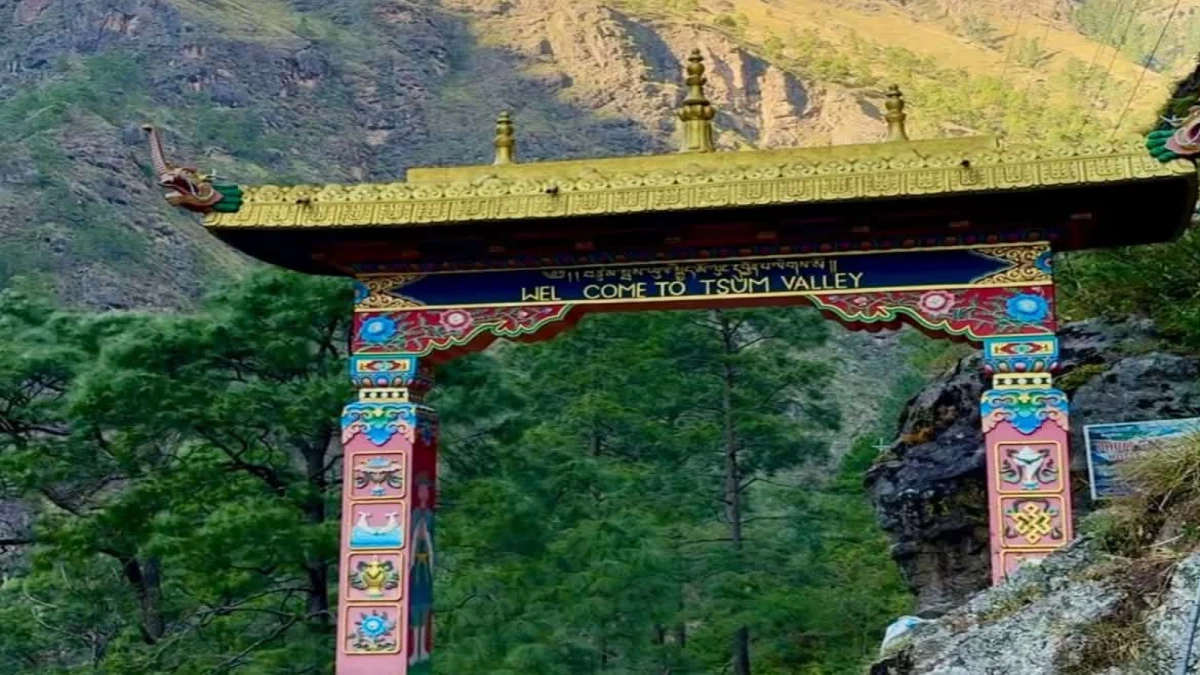
There is another side of the Manaslu Circuit most trekkers never see. Just off the main trail sits Tsum Valley. It is a hidden, sacred part of the Himalayas that stayed closed to outsiders until 2008. The valley has preserved its ancient monasteries, traditional villages, and Tibetan-influenced culture. The Tsum Valley Manaslu Trek combines the two trails into a single route. It’s a detour into Tsum Valley before rejoining the main Manaslu Circuit trail toward Larkya La. This trek turns out to be about much more than just crossing a pass. 

Tsum Valley Manaslu Trek at a Glance 

  • Duration: 18 days (Kathmandu to Kathmandu)
  • Trek region: Manaslu Conservation Area, Tsum Valley, and Annapurna Conservation Area
  • Max altitude: 5,106 m (Larkya La)
  • Trek grade: Moderate to strenuous
  • Total trekking distance: approx. 180-190 km
  • Starting point: Machha Khola (via road drive from Kathmandu)
  • Ending point: Dharapani (via road drive back to Kathmandu)
  • Best season: September to November, and March to May
  • Accommodation: Teahouses and basic guesthouses throughout
  • Permits required: Manaslu Restricted Area Permit, Tsum Valley Restricted Area Permit, Manaslu Conservation Area Permit, Annapurna Conservation Area Permit
  • Guide requirement: Licensed guide mandatory by law

Why Combine the Tsum Valley with Manaslu Trek 

Ask some trekkers what they want from Nepal trekking, and you'll get two different answers. Some want the mountains, big passes, and glacier views, while others want the culture, monasteries, prayer flags, and villages. The Tsum Valley Manaslu Trek is one of the rare routes where you get both.

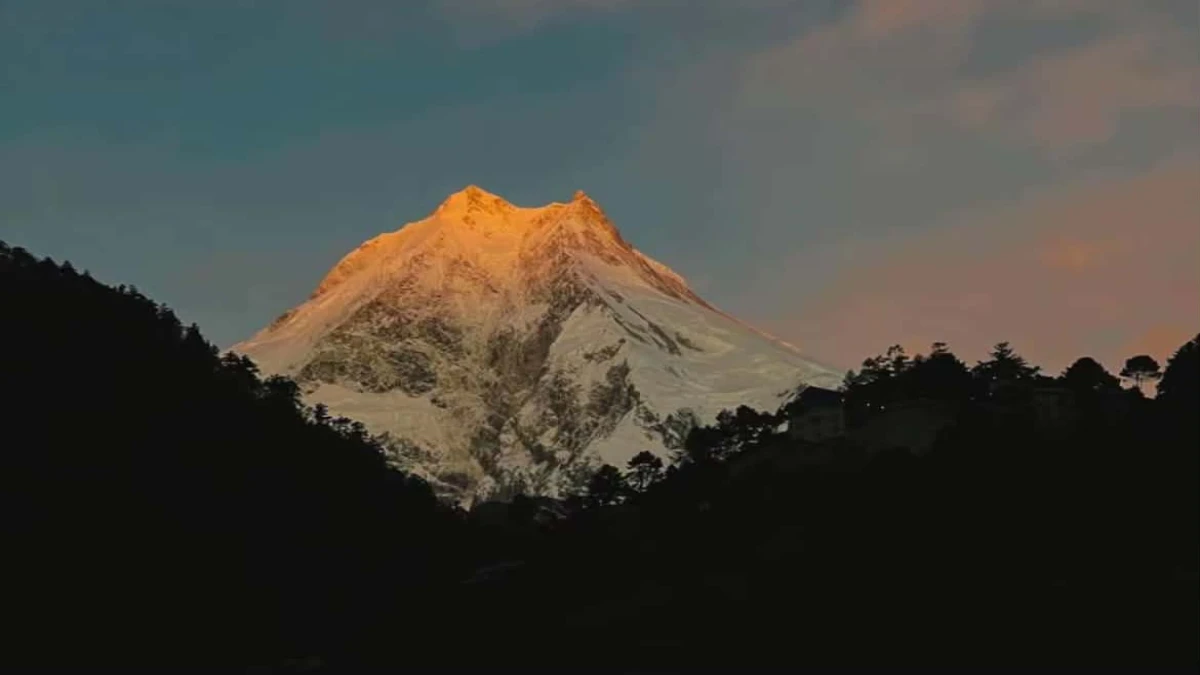
The Manaslu Circuit Trek follows the Budhi Gandaki River around Mount Manaslu, which is the eighth-highest mountain on earth, and the climb over Larkya La Pass at 5,106 meters. That's the best thing about this Tsum Valley and Manaslu Trek. 

Then there's Tsum Valley, where things get interesting. It's a valley that is tucked up near the Tibetan border. The monasteries you see here are centuries old, and some villages still follow a simple and traditional way of life. 

When you combine these two, the trek feels exciting now. You start in the lower Budhi Gandaki Valley, take a peaceful detour into Tsum Valley, return to the main trail, and finally cross the challenging Larkya La Pass. Not many treks in Nepal offer that kind of range, cultural depth, and high-altitude adventure in one itinerary.

Combining Tsum Valley and Manaslu Circuit Trek also has a reason. The two routes connect naturally. Doing them separately means walking twice in the same region. Doing the treks together means you save money and time, and you’ll also get a better trek out of it.

Manaslu Circuit Route: From Budhi Gandaki to the Tibetan Borderlands 

The Manaslu Circuit route starts low at Machha Khola after the long drive from Kathmandu. From there, the trail follows the Budhi Gandaki River, and you’ll be walking through terraced farmland, crossing the river on suspension bridges, and passing through villages. 

The landscape changes around Namrung. This is where the Manaslu Circuit stops feeling like a river walk and starts feeling like you're heading into Tibet. The houses change, prayer flags appear, and the language you hear in teahouses changes too. By the time you reach Sama Gaun, you're deep in Tibetan borderland culture. 

From Sama Gaun, the trail keeps climbing to Samdo, the last village before the pass. From there, you reach Dharamsala, also known as Larkya Phedi. It has only a few basic lodges and is used as a resting point before the climb to Larkya La the next morning.

What makes this stretch of the Manaslu Circuit special is how the landscape and culture shift in just a few days of walking. You start near rice terraces and end near glaciers. The villages begin to look Tibetan, and this part also makes the route appealing.

Tsum Valley: The Sacred Detour Before Larkya La

Somewhere around Lokpa, the Manaslu Circuit trail splits into two routes. Most people follow the main route, while some turn toward Tsum Valley. The ones who combine Tsum Valley Trek with Manaslu Circuit discover a quieter and more culturally rich side of the region. 

The Tsum Valley opens up slowly. First you reach Chumling, then Chhekampar, then Nile and Chhule along the trail. These villages don't see many visitors because it isn’t as famous as Manaslu. This was a restricted area until 2008, and it still feels that way. 

Mu Gumba sits near the top of the valley, close to the Tibetan border, and this monastery helps you to understand why Tsum Valley is known as the “Hidden Valley.” There is another gumba named Rachen Gumba, it is worth visiting. Along the way, you can also visit the famous Tibetan Buddhist saint. 

You’ll come back out of Tsum Valley the same way you went in and rejoin the main Manaslu trail. 

Crossing Larkya La: The Highest Point of Tsum Valley Manaslu Trek 

Everything before this day is just a build-up to cross Larkya La Pass.Dharamsala, the last stop before the pass, sits cold and quiet at night, and most people don't sleep much. You wake up around 4 or 5 in the morning, put your headlamp on, and start walking in the dark. The early start helps you to reach the pass before the wind picks up.

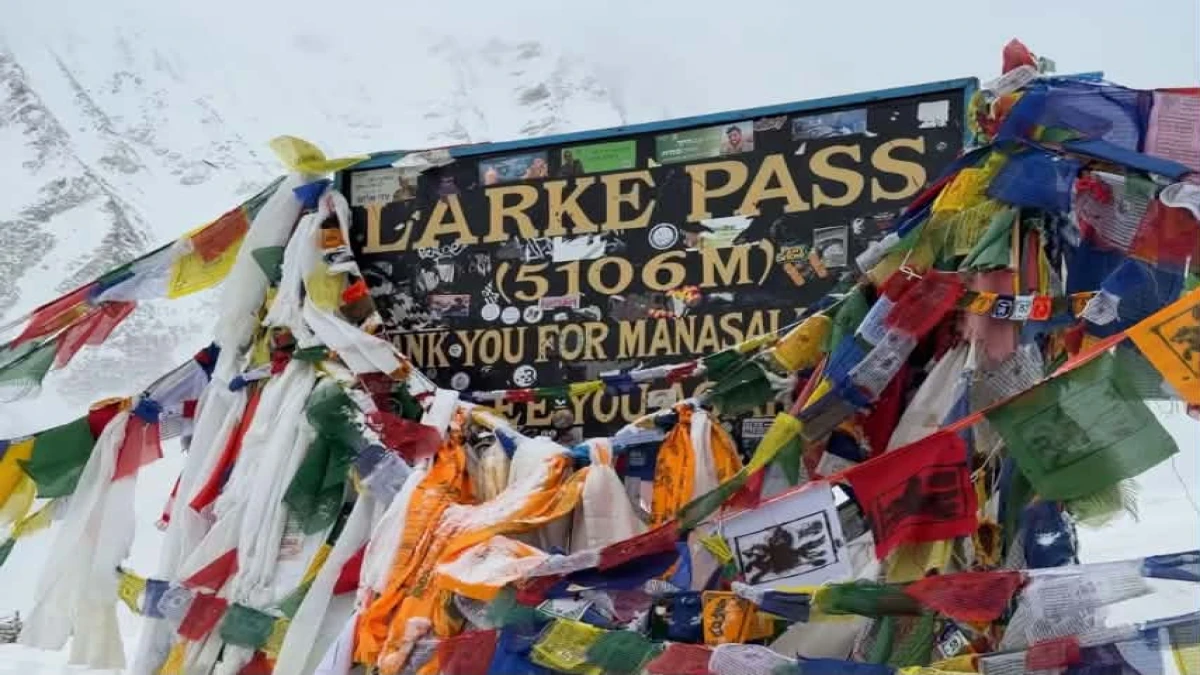
Larkya La sits at 5,106 meters. The air feels thin at this altitude, and every step takes effort. After hours of climbing, you’ll finally reach the pass and see the prayer flags fluttering in the strong wind. On a clear day, you can see Himlung, Cheo, and Annapurna II across the horizon.

Nobody stays long at the top. It's too cold, and the air is too thin. But people still take some photos and breathe thin air for a minute. Then you start heading down toward Bimthang. Now, everything feels different. You’ll see trees again, and the air is no longer thin.  

This is the moment that gives the Tsum Valley Manaslu Trek its shape. Everything before Larkya La is culture, rivers, and quiet valleys. Everything after that is just coming back down to earth, in the most beautiful way.

Tsum Valley Manaslu Trek Itinerary

Trip PlanExpand all
  • Distance: approx. 150 km, 7-9 hours

Trek Highlights:

  • A long, bumpy drive out of the Kathmandu Valley, with the road getting rougher
  • Views open up as you follow the Budhi Gandaki River toward the hills
  • Your last night with paved roads and easy phone signals
  • Overnight in a simple guesthouse in Machha Khola
Max Altitude: 869 m Meals: Lunch and DinnerAccommodation: Teahouse
  • Trekking distance: approx. 22 km, 6-7 hours 

Trek Highlights: 

  • Trail follows the Budhi Gandaki River, crossing several suspension bridges
  • Stop at Tatopani's natural hot springs if your legs need it
  • Pass through small riverside villages like Khorlabesi and Tharo Khola
  • Jagat itself sits on a rock shelf above the river, with mani walls 
  • Here, you’ll see your first proper mountain views
Max Altitude: 1,340 m Meals: Breakfast, Lunch, and DinnerAccommodation: Teahouse
  • Trekking distance: approx. 22 km, 6-7 hours

Trek Highlights:

  • You’ll officially enter the Manaslu restricted area today 
  • Trail climbs past Salleri and Philim Village, one of the larger settlements on this stretch
  • Forest gets denser as the valley narrows
  • Lokpa is the junction point, where the Tsum Valley trail splits off from the main Manaslu Circuit
Max Altitude: 2,240 m Meals: Breakfast, Lunch, and DinnerAccommodation: Teahouse
  • Trekking distance: approx. 8 km, 5-6 hours

Trek Highlights: 

  • This is your first day properly inside Tsum Valley
  • Trail descends into the Shar Khola Valley before climbing again through peaceful pine and rhododendron forests. 
  • Noticeably quieter than the main circuit with fewer trekkers and  fewer teahouses
  • Chumling Gompa marks the end of the day, offering a chance to visit one of the valley’s older monasteries
Max Altitude: 2,386 m Meals: Breakfast, Lunch, and DinnerAccommodation: Teahouse
  • Trekking distance: approx. 11 km, 5-6 hours

Trek Highlights: 

  • Valley starts to open up, with wider views and more farmland
  • Trail passes through several small Tsum villages, each with its own mani walls and chortens
  • Tibetan architectural influence becomes obvious with flat roofs and stacked stone
  • Chekampar is actually two connected villages, and a good base for exploring the upper valley
Max Altitude: 3,010-3,031 m Meals: Breakfast, Lunch, and DinnerAccommodation: Teahouse
  • Trekking distance: approx. 9 km, 4-5 hours

Trek Highlights: 

  • This is a shorter day, good for easing into higher altitude
  • Passes Piren Phu (Pigeon Cave), a sacred meditation site linked to the Tibetan saint Milarepa
  • Landscape turns drier and more open the higher you climb
  • Nile sits close to the head of the valley
Max Altitude: 3,361 m Meals: Breakfast, Lunch, and DinnerAccommodation: Teahouse
  • Trekking distance: approx. 10 km round trip, 4-5 hours

Trek Highlights: 

  • This is one of the best days in Tsum Valley for most trekkers
  • Mu Gumba is the largest monastery in the region, close enough to the Tibetan border to feel it
  • Time to sit with monks, ask questions, and look around without rushing
  • Overnight at Mu Gumba if the lodge is open that season; otherwise back down to Nile for the night
Max Altitude: 3,700 m Meals: Breakfast, Lunch, and DinnerAccommodation: Teahouse
  • Trekking distance: approx. 19 km, 5-6 hours

Trek Highlights: 

  • This is a long descent day, retracing much of the route from earlier in the week
  • It feels easier walking than climbing up
  • Back to Chumling for the night
Max Altitude: 3,361 m Meals: Breakfast, Lunch, and DinnerAccommodation: Teahouse
  • Trekking distance: approx. 16 km, 6-7 hours

Trek Highlights: 

  • Leaving Tsum Valley behind and rejoining the main Manaslu Circuit trail
  • Trail follows the Shar Khola down to its meeting point with the Budhi Gandaki
  • Forest walking most of the day
  • Deng is a small settlement, but it marks the start of the "second half" of the trek
Max Altitude: 2,386 m Meals: Breakfast, Lunch, and DinnerAccommodation: Teahouse
  • Trekking distance: approx. 19 km, 6-7 hours

Trek Highlights: 

  • A steady climb through bamboo and rhododendron forest.
  • Crosses through Ghap. This is a village with a distinctly Tibetan feel 
  • Namrung has a permit checkpoint and marks the entry into the upper Manaslu region
Max Altitude: 2,630 m Meals: Breakfast, Lunch, and DinnerAccommodation: Teahouse
  • Trekking distance: approx. 17 km, 5-6 hours

Trek Highlights: 

  • Passes through Lho, with your first proper close-up views of Manaslu, if the sky's clear
  • Trail opens up into wider alpine terrain
  • Shyala sits right under the mountain, with some of the best views on the trek
Max Altitude: 3,520 m Meals: Breakfast, Lunch, and DinnerAccommodation: Teahouse
  • Trekking distance: approx. 5 km, 2-3 hours

Trek Highlights: 

  • It is a short day on purpose. Your body needs the easier pace as altitude climbs
  • Explore Sama Gaun once you arrive
  • Views of Manaslu and Manaslu North dominate the skyline all day
  • Sama Gaun is the biggest village left on the route, with real shops and a proper acclimatization stop.
Max Altitude: 3,530 m Meals: Breakfast, Lunch, and DinnerAccommodation: Teahouse
  • Trekking distance: approx. 14 km round trip, 5-6 hours

Trek Highlights: 

  • It’s a rest day, but it isn't really restful.
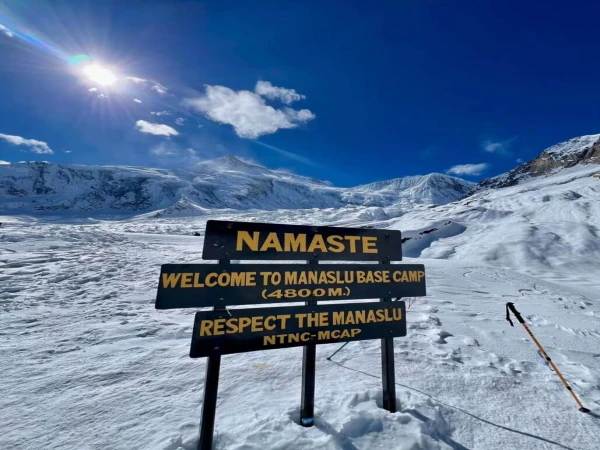
  • Hike up toward Manaslu Base Camp, with glacier and icefall views
  • Alternative shorter option: Birendra Lake, a turquoise glacial lake close to the village
  • This day matters more for your body than almost any other on the trek. So, don't skip it
Max Altitude: 4,800 m Meals: Breakfast, Lunch, and DinnerAccommodation: Teahouse
  • Trekking distance: approx. 8 km, 3-4 hours

Trek Highlights: 

  • Shorter, gentler day along the Budhi Gandaki River
  • Landscape turns drier, more Tibetan, and there are fewer trees
  • Samdo is the last real village before the high and remote stretch toward the pass
Max Altitude: 3,875 m Meals: Breakfast, Lunch, and DinnerAccommodation: Teahouse
  • Trekking distance: approx. 8 km, 3-4 hours

Trek Highlights: 

  • This is a short walking day, but altitude makes it feel longer than the distance 
  • Trail crosses open and exposed terrain with almost no vegetation left
  • Dharamsala (also called Larkya Phedi) is really just a cluster of basic lodges
  • Have an early dinner and early sleep because tomorrow's the big day
Max Altitude: 4,460 m Meals: Breakfast, Lunch, and DinnerAccommodation: Teahouse
  • Trekking distance: approx. 20 km, 8-9 hours

Trek Highlights: 

  • The hardest and longest day of the entire trek
  • Start early with headlamp on, walking in the dark for the first two hours
  • The crossing of Larkya La itself at 5,106 meters, with prayer flags and views of Himlung, Cheo, and Annapurna II
  • Long descent into Bimthang afterward, where trees and warmer air return for the first time in days
Max Altitude: 5,106 m Meals: Breakfast, Lunch, and DinnerAccommodation: Teahouse
  • Trekking distance: approx. 22 km, 6-7 hours 

Trek Highlights: 

  • It’s a long but easier day after yesterday's effort
  • Forest returns with warmer temperatures
  • Trail rejoins the Annapurna Circuit route near Dharapani
Max Altitude: 3,720 m (Bimthang, start of day) Meals: Breakfast, Lunch, and DinnerAccommodation: Teahouse
  • Distance: approx. 200 km, 8-9 hours (via Besisahar) 

Trek Highlights: 

  • Long drive back, with a stop in Besisahar along the way
  • You're back in Kathmandu by evening.
  • The Tsum Valley Manaslu Trek completes here, but the memories are with you forever. 
Max Altitude: 1,920 m Meals: Breakfast and Dinner
Couldn't find what you're after?Reach out to our travel experts.
Customize Trip

Cost Details

Includes

  • Airport pickup and drop-off in Kathmandu
  • Teahouse/lodge accommodation throughout the trek
  • All meals during the trek: breakfast, lunch, and dinner
  • Licensed, experienced, English-speaking trekking guide
  • All permits (Manaslu RAP, Tsum Valley RAP, MCAP, ACAP)
  • Local transportation from Kathmandu to the trailhead and from the trek's ending point back to Kathmandu
  • Government/local taxes and service charges
  • First-aid medical kit carried by the guide

Excludes

  • Flights into and out of Kathmandu
  • Nepal visa fees on arrival
  • Travel insurance 
  • Personal gear you didn't already own
  • Meals and hotel nights in Kathmandu, before and after the trek
  • Hot showers and device charging at higher-altitude teahouses, which almost always cost extra
  • Tips for your guide and porter

Dates & Availability

Select Departure Dates
Aug 2026
Sep 2026
Oct 2026
Nov 2026
Dec 2026
Jan 2027
Feb 2027
Mar 2027
Departure Date
Status
Price
Departure Date
Starts: 25 Aug, 2026Ends: 11 Sep, 2026
Status
Guaranteed
Price
US$1150US$1299
Save US$149
Departure Date
Starts: 28 Aug, 2026Ends: 14 Sep, 2026
Status
Guaranteed
Price
US$1150US$1299
Save US$149
Departure Date
Starts: 29 Aug, 2026Ends: 15 Sep, 2026
Status
Guaranteed
Price
US$1150US$1299
Save US$149
Departure Date
Starts: 31 Aug, 2026Ends: 17 Sep, 2026
Status
Guaranteed
Price
US$1150US$1299
Save US$149

Essential Information

Difficulty, Altitude, and Acclimatization on the Tsum Valley Manaslu Route

Many people ask whether the Tsum Valley Manaslu Trek is hard. But it depends on your legs and lungs. The walking isn't technical here, but altitude makes the trek tough.

How Hard Is the Tsum Valley Manaslu Trek

You don't need to be a professional trekker for the Tsum Valley and Manaslu Circuit trek. You just need to be someone who can walk five to seven hours a day, several days in a row, without your body falling apart. If you've done a multi-day trek before, or you're reasonably active in daily life, you'll be fine for the trek. Most of the route follows dirt trails, stone steps, and suspension bridges, with no technical climbing required. 

Altitude on the Tsum Valley Manaslu Trail

The trek gradually gains altitude, and by the time you reach Samdo or Dharamsala, you're well above 4,000 meters. Adding Tsum Valley into the trip actually helps here, it adds extra days at altitude before the push over Larkya La, which gives your body more time to adjust.

Acclimatization Tips for Tsum Valley Manaslu Trek

Good acclimatization for Manaslu Trek is simple, but trekkers don't always follow it. Here are some of the tips for acclimatization. 

  • Walk slowly, especially above 3,000 meters
  • Don't skip the rest days built into the itinerary
  • Drink more water than usual to stay hydrated. 
  • Avoid alcohol until you're back down at lower elevation
  • If you get a bad headache, nausea, or feel unusually short of breath while resting, stop climbing and tell your guide. Don't try to push through these symptoms.

Best Time for Tsum Valley Manaslu Trek 

There is no one right time for the Tsum Valley Manaslu trek, but there are some months that offer much better weather and trail conditions than others 

  • Autumn (September to November): This is when most people go because the sky clears up after monsoon, the views hold, and the trails are in decent shape. October is probably the busiest month. 
  • Spring (March to May): This is another good month to trek in Nepal. You’ll see rhododendrons on the trail, the sky is clear, and temperatures are warmer. People prefer this kind of weather to cross Larkya La Pass. 
  • Winter (December to February): The Tsum Valley and Manaslu Trek is doable in the winter season, but Larkya La can close due to heavy snowfall, and some teahouses in the higher villages shut down for the season.  
  • Monsoon (June to August): This season brings heavy rain in Nepal. You’ll see leeches on the lower trail, clouds block the views, and there is also a real risk of landslides. Almost nobody treks the Tsum Valley Manaslu route in the monsoon season.

Who the Tsum Valley Manaslu Trek Is Best Suited For 

The Tsum Valley trek can be great for most trekkers who want more than just mountain views, but it isn't a trek for a complete beginner who hates walking. Let us give you an idea of who tends to get the most out of the trek.

  • Experienced trekkers looking for something beyond Everest or Annapurna: If you've already done one of the big-name treks and want somewhere quieter with a similar level of challenge, then this is exactly that.
  • People who care about culture as much as scenery: If you are not interested in the monasteries, villages, and culture of Tsum Valley, the standard Manaslu Circuit Trek may be a better choice, it also takes less time. 
  • Trekkers comfortable with basic teahouses: Rooms on the trail are simple, hot showers aren't guaranteed, and Wi-Fi is not very steady once you're past the lower villages. If you need comfort every night, this route will stress you.
  • Anyone reasonably fit: As long as you can walk five to seven hours a day for close to two weeks, you don't need special training. Altitude affects both the fit and unfit almost equally.
  • People who don't mind fewer facilities and services: This region isn't as developed as Everest or Annapurna. There are fewer teahouses, fewer bakeries, and you’ll see fewer trekkers on the trail. 
  • Not ideal for first-time trekkers with no altitude experience: It's not impossible, but this is a hard trek for a complete beginner. If it's your first time in the mountains, you can try other short treks in Nepal.

Permits Required for Tsum Valley Manaslu Trek

The Tsum Valley and Manaslu trek is a restricted region trek. You need a licensed guide, a registered trekking agency, and all the necessary permits before you step foot past Machha Khola. Here are the permits you actually need.

  • Manaslu Restricted Area Permit (RAP): The Manaslu region is a restricted trekking area, so you need a Restricted Area Permit (RAP) to enter the route. The fee depends on the season and the number of days you spend in the restricted section. 
  • Manaslu Conservation Area Permit (MCAP): The trek also passes through the Manaslu Conservation Area, so trekkers need a Manaslu Conservation Area Permit (MCAP). 
  • Tsum Valley Restricted Area Permit: A Tsum Valley Restricted Area Permit is required to enter Tsum Valley. 
  • Annapurna Conservation Area Permit (ACAP): After crossing Larkya La, the trail drops down into Dharapani, which sits inside the Annapurna Conservation Area. So, you also need an ACAP.

Note: solo trekking isn't allowed here. You need a minimum of two people and a licensed guide just to get the permits issued, so this isn't a trek you can arrange independently. 

Accommodation and Meals on Tsum Valley Manaslu Route

Manaslu and Tsum Valley are remote areas and have really simple teahouses. Don't come here expecting the kind of teahouses you'll find on the popular trekking trails of Nepal.

Lower down, around Machha Khola and Jagat, the guesthouses are decent, but as you climb higher towards Tsum Valley or up toward Samdo, things get more basic. Rooms are small, walls are thin, and hot showers are rare.

Food follows the same pattern on the Manaslu Circuit and Tsum Valley Trek. It’s simple, filling, and repetitive if you're picky. You’ll get rice, lentils, vegetable curry, and unlimited refills, which matters a lot after a long walking day. You'll also find dishes like noodle soups, momos, fried potatoes, and pasta almost everywhere. But the higher you go, the menu gets smaller and more expensive. 

Bring some snacks from Kathmandu if you're picky, and don't expect much variety once you're past Sama Gaun. But if you're the type who's fine trading choice for authenticity, the food and lodging here end up being one of the better parts of the trek.

Guides, Porters, Transport and Group Options for Tsum Valley Manaslu Trek

Guides

A licensed guide is mandatory for the Manaslu and Tsum Valley trek. No guide means no permit, which also means no trek. Beyond the legal side, having someone who actually knows the trail matters more on this route. A good guide is also the person who knows which teahouse has the warmer rooms, who knows the weather before Larkey La pass crossing, and who can talk to you about what you're actually walking through in Tsum Valley.

Porters

Hiring a porter isn't mandatory for this restricted region trek. Carrying your own full pack for two weeks is entirely a different trek than carrying a light daypack while a porter handles the rest. Porters usually carry the luggage of two trekkers, making the long walk much easier. They are also local workers whose income supports their families and communities. So, a fair tip at the end of the trek is a good way to appreciate their hard work and contribution to the journey. 

Transport to the Trailhead

The trailhead of Tsum Valley Manaslu Trek starts from Maccha Khola. Getting here means it's a long drive in a jeep or a public bus from Kathmandu. The drive takes somewhere between 7 to 9 hours on roads that get rougher the closer you get to the mountains. Some people break this into two days with an overnight stop, and honestly, that's not a bad call if you'd rather not spend your first trekking day exhausted from a full day in a jeep. 

Group Joining Option to Tsum Valley Manaslu Trek

You can do this trek as a private trip with just your own group, or join a fixed departure with other trekkers if you're travelling solo and don't want to pay for a private guide alone. A group joining trek to Manaslu Circuit and Tsum Valley can be best for budget trekkers, since the cost is shared among the group.

Responsible Trekking in a Restricted and Sacred Region of Tsum Valley and Manaslu

This trek isn't just another trail you're walking through. Tsum Valley is a place where people actually live their faith. The monasteries, the mani walls, the prayer wheels you'll pass along the trail deeply mean something to the people who built them. So, take the time to respect these sacred places and local customs.

A few things go a long way. Pass mani walls and chortens on your left, walking clockwise. It's a small habit, and locals notice when trekkers get it right. Ask before photographing inside a monastery, especially during prayer. And dress a bit modestly in the villages here.

The restricted-area rules are there to protect the environment and traditional way of life in Manaslu and Tsum Valley. Traveling with a licensed guide and the required permits helps keep tourism responsible and controlled. You can also do your part by staying on marked trails, carrying your rubbish with you, including toilet paper, and supporting local teahouses by buying food and supplies along the way. 

None of this is really about rules. Tsum Valley stayed closed until 2008 for a reason, and how it stays worth visiting now depends on how people walking through it behave. Trek here the way you'd want someone walking through your own home.

What to Pack for Tsum Valley Manaslu Trek?

Packing for a Manaslu region trek means preparing for cold, high-altitude days near Larkya La and remote trails where you may not have a chance to buy something you forgot. The right gear can make the trek safer, warmer, and much more comfortable. Here’s what you should pack:

Upper body

  • Base layers
  • Fleece or light down jacket
  • Proper down jacket for higher altitude

Lower body and feet

  • Trekking pants (warm and light pair)
  • Thermal leggings
  • Broken-in hiking boots
  • Wool socks
  • Camp shoes

For the Larkya La crossing

  • Windproof, waterproof outer shell
  • Thin gloves and insulated gloves
  • Warm hat
  • Buff or scarf

Sleep and health

  • Sleeping bag rated -15°C or lower
  • First-aid kit with altitude medication
  • Blister care

Other essentials

  • Headlamp
  • Trekking poles
  • Water bottle + purification tablets or filter
  • Sunglasses (UV protection)
  • Sunscreen

For Tsum Valley

  • Modest clothing for monastery visits
  • Cash in Nepali rupees (no ATMs past Kathmandu)

Pack light because porters carry a set weight limit, and you'll use less than you think.  When deciding what to pack, always prioritize warmth, comfort, and keeping yourself dry over unnecessary items.

Why Trek With Himalayan Partner Treks? 

Choosing the right trekking agency really matters, especially for restricted-area treks like Tsum Valley and the Manaslu Circuit. At Himalayan Partner Treks, we focus on making the journey safe, well-organized, and enjoyable from the moment you arrive in Nepal until you finish the trek. 

  • Guides who actually know Tsum Valley, not just the standard Manaslu Circuit. Guide who knows which teahouse family will tell you the real story behind Mu Gumba, and which acclimatization day at Sama Gaun is worth a short side walk instead of just resting.
  • Itineraries built around this specific route, not a generic template. We arrange permits early, and acclimatization days are placed where they are needed the most based on altitude gain.
  • Real contingency plans, not just promises. If weather closes Larkya La for a day, we have the local relationships to work out a plan instead of leaving you stuck in Dharamsala.
  • Small group sizes, kept small on purpose. You’ll trek in a manageable group where a guide knows your name and your pace by day two.
  • Flexible departures for solo travelers. We keep group departures open for solo travelers who don’t want to trek alone in a restricted region on Manaslu. 

None of this is about being the biggest name in Kathmandu. It's about treating Tsum Valley and Manaslu as more than a box to check off on a bigger circuit. We want you to experience the villages, culture, mountains, and people of the region while having a trek that is properly planned from start to finish. 

Tsum Valley Manaslu Trek FAQs

Most itineraries run between 16 and 22 days, depending on the route and number of acclimatization days. Our Tsum Valley Manaslu Trek is an 18-day journey, giving you enough time to explore and adjust to the altitude without rushing.

Not really. It's manageable for someone reasonably fit with no prior trekking experience, but the high altitude, long walking days, and remote terrain make it more challenging for beginners. If it's your first time in the mountains, an easier route first is the safer call.

Yes, you can travel as a solo trekker, but not independently. Manaslu and Tsum Valley are restricted areas, so you must trek with a licensed guide and obtain the required permits through a registered trekking agency. 

Internet access is limited and unreliable on the Manaslu and Tsum Valley trail. Some lower teahouses sell Wi-Fi cards, but don't count on staying connected once you're past Deng or Chumling. A local SIM with data works in a few spots but not reliable above Sama Gaun.

Yes, you need travel insurance for this trek, and it needs to specifically cover high-altitude trekking and helicopter evacuation up to at least 6,000 meters. Standard travel insurance often excludes trekking above a certain altitude, so check it before you book.

Altitude sickness is a real risk on the Manaslu and Tsum Valley trek, especially as you approach the higher sections and Larkya La. However, the risk can be reduced by ascending gradually, staying hydrated, and following the planned acclimatization days. 

For most trekkers, yes. Tsum Valley adds a different side to the Manaslu experience, with its peaceful villages, ancient monasteries, unique Tibetan-influenced culture, and quieter trails.