When I climbed Mount Everest for the first time, someone asked me how much it costs to climb Everest. I just laughed and said, it costs more than money. But I know that's not the answer you're looking for. So let me tell you what nobody told me before I went.
I still remember sitting in my hotel in Kathmandu, checking the cost of an Everest expedition online. I was so confused; some blogs said it costs $30,000 while some said $160,000.
Then slowly, I talked to climbers who had already completed their climb. And I started to understand where the money actually goes and where it doesn't. Then I ended up climbing Mount Everest with Himalayan Partner, and they made this confusing process feel so simple. The prices were fair, with no extra charge, and a team that knew the mountains inside out. But that's a small part of a much bigger story.
The truth is, climbing Everest costs more than just the price you see on a website. There are many extra costs, choices, and things you may not know about until you reach Everest Base Camp. So here’s a real breakdown of the cost of climbing Everest, based on actual experience.
Why Does Everest Climbing Cost So Much?
Before I went to Everest, I thought the high price was just about making money from people’s dreams. But after my Everest Expedition, I understood it isn’t true.
Everest isn’t just a mountain you pay to climb. Many people work behind your climb. You need to pay the Sherpas who fix ropes, cooks who prepare food, and porters who carry heavy loads. They all take on risks just for your successful climb. That risk has a price, and they deserve to be paid for it.
Then there’s the government permit fee, which is just a small part of the total Everest expedition cost. You also need to pay for oxygen bottles, tents, ropes, and other equipment that needs to be carried up and replaced every season.
The weather window is also very short, so many climbers have to move at the same time. When you look at everything involved in climbing Mount Everest, you’ll start to understand that the cost isn’t simply about making money. It's about how genuinely hard it is to keep people alive up there.
I didn't even understand that until I was standing at Base Camp and watching the Sherpas prepare loads before sunrise. That’s when I realized that the money I paid was helping support the people and work that truly mattered.
Everest Climbing Cost Breakdown
I still have the notebook where I first wrote all the costs, with numbers and question marks everywhere. Nothing really made sense until I experienced it myself.
So, how much does it actually cost to climb Mount Everest? The answer depends on how you plan your expedition, the company you choose, the level of support you need, and how much equipment you already have. Here’s the real Everest climbing cost breakdown, explained in the way I wish someone had explained it to me.
- Climbing permit: This is the government fee you pay for permission to climb Mount Everest. It costs around $15,000 per person in the spring, $7,500 per person in the autumn, and $3,750 per person in winter and monsoon. The price is non-negotiable no matter which company you choose.
- Guide and Sherpa support: This is where a big part of the cost goes. You’re paying for experienced guides, climbing Sherpas, their equipment, and insurance. Depending on the number of Sherpas, their experience, and the level of support you choose, the exact amount varies.
- Oxygen: Bottled oxygen for the summit push is something you definitely need, and it isn't cheap either. For the bottles, mask, and regulator, this usually adds several thousand dollars to the expedition costs.
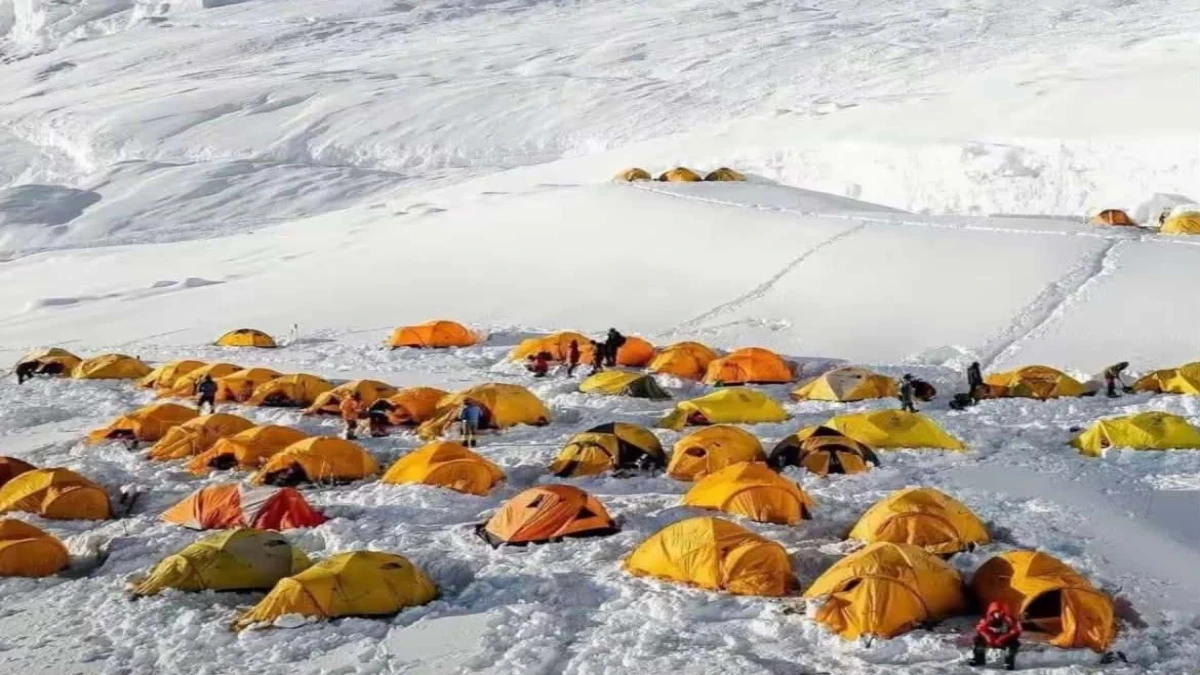
- Base Camp logistics: This includes food, tents, cooking staff, communication equipment, and yaks to carry supplies to Base Camp. This quietly adds up in your expedition cost list, and it's the part most people forget to budget for.
- Gear and supplies: You’ll need warm down suits, boots for extreme altitude, and sleeping bags built for -40°C nights. Even after renting some of it, I still spent close to $8,000 to $10,000 on the gear I needed.
- Insurance: High-altitude climbing requires specialized insurance, and many climbers also keep extra money aside for emergency evacuation or unexpected situations. This typically runs $500 to $2,500 depending on coverage.
- Flights, visa, and incidentals: International flights, Nepal visa, hotels in Kathmandu, Lukla flight, tips for the crew. Easy to underestimate, but usually adds another several thousand dollars.
When all the major expenses are considered, $35,000-$70,000 is a realistic 2026 planning range for many guided Everest expeditions from Nepal. Premium operators with better Sherpa ratios, private tents, and higher safety margins can go beyond $100,000.
When I saw the total for the first time, I felt this climb felt impossible for me. When I saw where every dollar actually went, then the cost felt fair.
Where the Real Money Goes while climbing Mount Everest
Before I climbed Everest, I thought the permit would be the biggest expense. It’s the government fee everyone talks about, so I assumed that was where most of the money went. But I was wrong, and I think most people are too.
The permit is actually one of the small pieces of the whole Everest expedition cost. It's the guide and Sherpa support that takes the biggest share. Because they are the people who make your climb successful, they are the people who spend months on that mountain, fixing ropes, carrying heavy loads, and waking before sunrise while you're still asleep in your tent.
When I finally understood that, the price stopped feeling expensive and started feeling like a wage for those people who worked so hard and took so many risks to help us climb.
The best thing is that your money goes to the right place. It doesn't go into luxury. Even on a mid-range budget, life at Base Camp is simple in a tent, with basic food, and a generator that often stops working.
People imagine climbers are paying for comfort, but we're not. We're paying for survival, and for the experience of people who know how to keep you alive where your body was never meant to live.
I also used to think oxygen and gear were the highest hidden costs. They're not small, but compared to the human support system behind every summit push, they're almost minor. The cost of climbing Everest isn't really about equipment. It's about paying for the people who make the mountain survivable.
By the time I got back, I never thought the climb was expensive because I knew every dollar I spent was tied to something that actually mattered up there.
Budget vs. Luxury Everest Expeditions: A Cost Comparison
I met climbers from both Budget and Luxury expedition experiences at Base Camp. Some climbers saved for years just to fulfill their dream; they were cutting extra expenses and making the expedition budget-friendly. I saw some climbers were carrying equipment that was worth more than I had spent on the entire trip.
Two types of climbers stand on the Everest summit in the same season and still have very different experiences. But we were all doing the same climb. We were all going to face the same wind, the same cold nights, and the same fear before the summit push. So, yes, money changes the experience, but it doesn’t change the mountain.
A budget Everest expedition usually costs somewhere between $30,000 and $45,000. I talked to a few climbers at the end of the expedition, and their setup was simple. Shared tents at Base Camp, basic meals, a smaller number of Sherpas supporting a larger group of climbers. But they made it work.
Then there's the other end. A luxury Everest expedition can easily go past $100,000, sometimes much more. They were having a luxury experience in heated dining tents, private cooks, and almost double Sherpa support. Their oxygen supply was more generous, their safety margins were wider, and if anything went wrong, they had more backup, faster. They were paying for more people, more equipment, and more redundancy.
My Everest expedition ended up somewhere in the middle. It was not the cheapest option, but nowhere close to the luxury either.
The cost of climbing Everest buys you comfort, safety margin, and peace of mind. It doesn't buy you the summit itself. That part, no amount of money can do for you. You still have to climb it yourself, same as everyone else standing up there.
Hidden Costs of an Everest Expedition
Nobody sits you down before the trip and tells you about the hidden costs. You just find it out, one by one, once you're already in Everest. Here's what quietly added to my Everest climbing cost that no one ever mentioned:
- Sherpa tips: They are not included in the expedition price, but everyone expects them. After watching them work before sunrise every single day, risking far more than I ever did, you’ll understand exactly why.
- Weather delays: Lukla flights can get delayed. That meant extra hotel nights, meals, and just waiting around in Kathmandu while the mountain decided when I was allowed to start.
- Last-minute gear: I thought I packed everything, but I was freezing at Base Camp. So, I realized I needed one more layer, a better pair of gloves. So, renting or buying all the equipment before the trek helps you.
- Rescue insurance: You need a policy that specifically covers high-altitude mountaineering and emergency evacuation.
- Extra crew tips beyond Base Camp: Tips for cooks, porters, kitchen staff, and everyone working behind the scenes to keep the expedition going. Each cost may seem small, but over several weeks, they can add up.
- Post-summit costs: Flights home, a medical check-up, even replacing gear that didn’t survive the expedition. I'd worn through completely. Nobody talks about the money that comes after you've already reached the top.
None of these costs are massive on their own. But stacked together, they quietly add a few thousand dollars onto your total cost of climbing Everest. I wish someone had warned me this before I left. So now, I'm warning you.
Does the Season You Climb Affect the Price?
Yes, the season you climb Everest affects the price more than you’ve expected. I used to think weather was just weather, something you deal with once you're up there. But I didn't realize it also shapes the budget of the expedition.
Spring (April to May) is the peak climbing season. It's when the weather window is calm, when most expeditions run, and when the mountain feels almost busy with climbers. Because everyone wants that window, prices get higher this season, permits fill up faster, and good guides and Sherpas get booked in advance.
There is also a shorter autumn climbing window, and some climbers choose it because it can be less expensive. But the savings come with a trade-off. Weather can be more unpredictable, winds can be stronger, and climbing conditions can change quickly.
I climbed in spring, paid the peak season price, and honestly, I'd make that same choice again without hesitation. Some costs exist for a reason, and paying more for a safer weather window was one decision I never regretted.
How to Reduce Everest Climbing Costs
I'm not going to pretend I found a way to climb Everest cheap. That doesn't exist, but I did find a few honest ways to save money without compromising safety:
- Book with a local Nepali operator: I went with Himalayan Partner, and their pricing was fair and transparent, without paying the additional markup that a lot of big international agencies quietly add on.
- Rent instead of buy: I rented most of my high-altitude gear, the down suit, the boots, things I'd probably never use again anyway. It saved me thousands without lowering the quality of what I climbed in.
- Join a small group climb instead of going private: Sharing Sherpa support and logistics with a small group cuts the cost significantly, and you’ll still feel completely supported the entire way up.
- Plan in advance: I noticed last-minute bookings almost always cost more, because operators charge extra for rushed planning during peak season.
- Travel light, but smart: I only packed the gear I actually needed, instead of carrying things I already owned but probably wouldn't use. It saved me from extra baggage fees and made the journey lighter.
None of these choices ever felt like sacrifices. They just felt like smart decisions made by someone who wanted to reach the top without emptying every account I had. Reducing your Everest climbing cost isn't about finding shortcuts. It's about spending wisely on the things that truly matter, and saving quietly on the things that don't.
Is Everest Worth the Cost?
I asked myself that question all the way up. Even now, sitting at home and looking through the photos, I still think about it. And the answer is yes, the Everest expedition is worththe cost. But it’s not for the reason I expected.
Before leaving, I thought Everest would be about the summit, the view, and being able to say, I did it. And that moment was incredible. But what stayed with me was everything behind it. The nights when I wasn't sure I would make it through, the Sherpas who were there to help us, and the version of myself I discovered above 8,000 meters.
The cost of climbing Everest is huge, and I understand why it makes people hesitate. I did too; I questioned whether spending that much on one experience was worth it. But standing above the clouds, I wasn't thinking about the money. I was thinking about how small I felt and somehow, how alive that made me feel.
So, is Everest worth the cost? I can't answer that for everyone. I can only say what it was worth to me. Every sacrifice, every doubt, and every rupee was completely worth it.