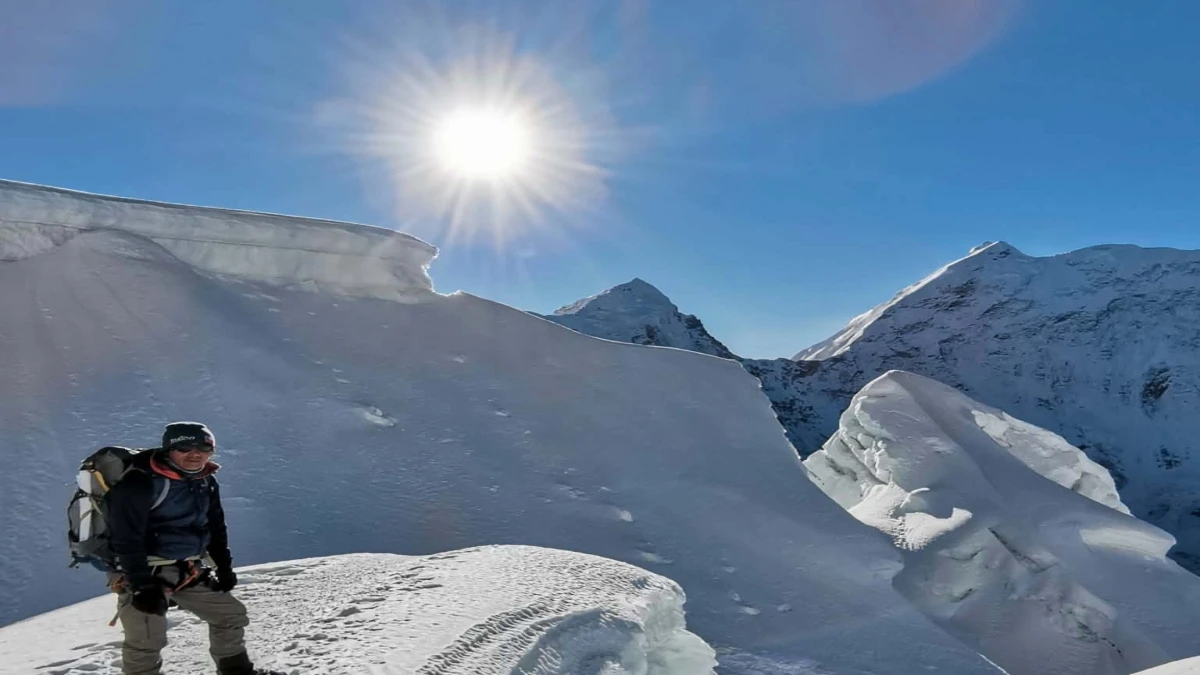
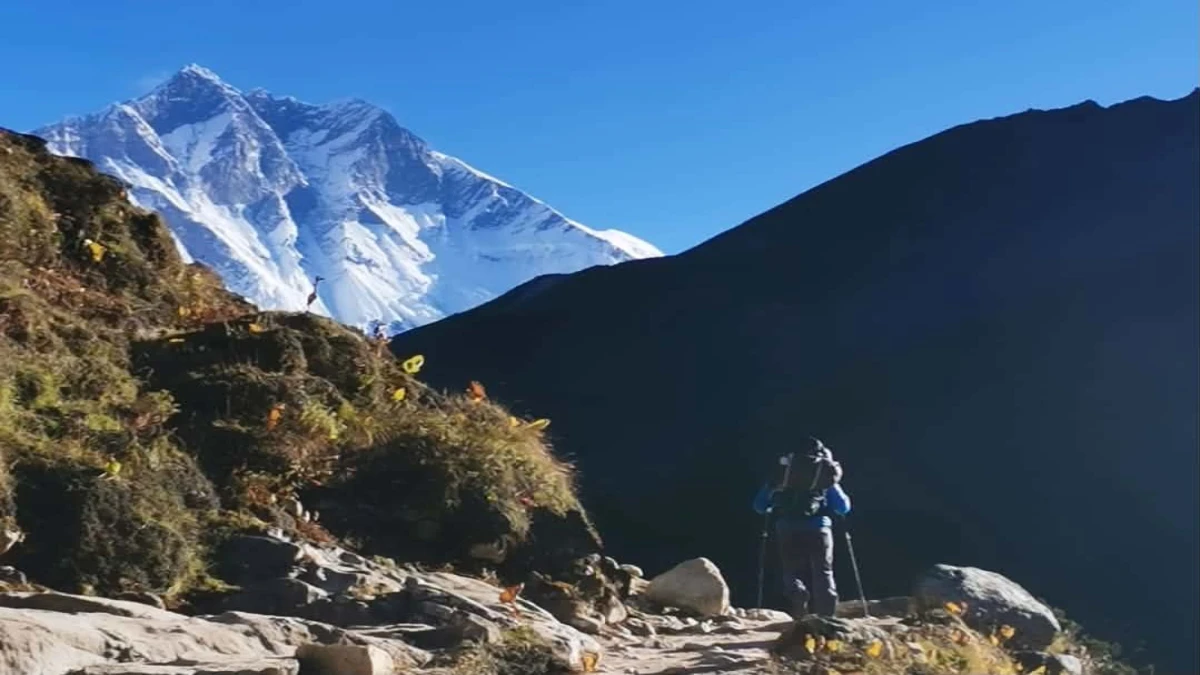
Island Peak and Everest Base Camp Trek Overview
Imagine you wake up in a small tea house in the Khumbu. Outside, the mountains are glowing pink. You can see your breath in the cold air, and now you are walking towards Everest. This is how the Everest Base Camp trek with Island Peak climb begins.
First, you trek to Everest Base Camp, walk through Sherpa villages, over high bridges, and past old monasteries, stand at 5,364 m, and see the Khumbu Icefall with your own eyes. Then you climb Kalapatthar for the best view of Everest.
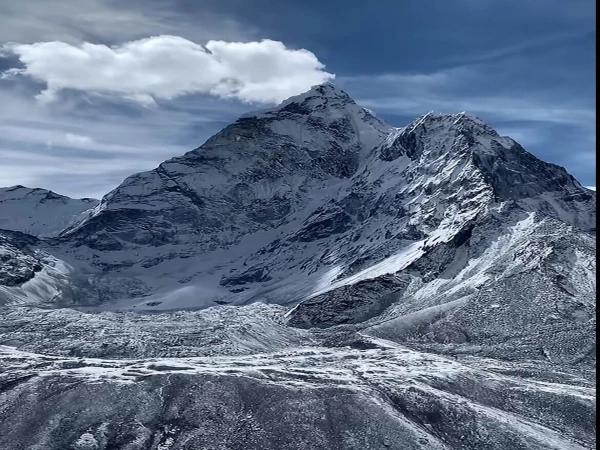
But we don't stop there. From the Everest Base Camp trek, you move on to Island Peak, also called Imja Tse, at 6,189 m. It is one of the best first climbing peaks in Nepal. The route is steady, views are huge, and standing on the summit feels like heaven.
After the climb, you don't walk all the way back. You take a helicopter back to Lukla from Chhukung. You fly over the valleys you just walked through. It saves your time as well as your knees.
We have done this trip many times. Every time, trekkers tell us the same thing: "I'm so glad I did both." So, now you should experience it too.
Why Combine Island Peak Climbing with the EBC Trek?
Here is a simple question for you. Why walk to Everest Base Camp and then go home, when you can also stand on a 6,000 m peak? This is the idea behind this trip.
- You save time and money: Just one trip, one flight to Lukla, one permit for the national park, but you see both Everest Base Camp and Island Peak without planning two separate holidays.
- You are already acclimatized: By the time you reach Dingboche, your body has had days to adjust to the altitude. You are strong, and you are ready for a bigger challenge. Many climbers who fly in just for Island Peak don't have this advantage.
- You get two adventures at once: The first part is a trek and the second part is a climb. You walk through villages, then you put on crampons and step onto the ice. It never gets boring.
- It is a great first climb: Island Peak is one of the most popular trekking peaks in Nepal. It is steep in places, but you don't need years of experience. Your guide teaches you the basics before the summit push.
- The views get better and better: At Everest Base Camp, you stand below the giants. On Island Peak, you stand above them. Lhotse, Makalu, and Ama Dablam feel incredibly close.
- The helicopter return is the reward: After days of walking and a tough summit day, you fly back to Lukla in minutes. Your legs get a rest, and you get one last view of the Khumbu from above.
So, if you are dreaming of Everest, don't stop at base camp. Take the next step. You will be glad you did.
Island Peak Climbing Route, Technical Difficulty and Summit Experience
Island Peak may look challenging, but it feels like a long climb rather than a wall. That is why so many first-time climbers choose it.
The Island Peak Climbing Route
After Everest Base Camp, you walk back down to Dingboche. Then you head to Chhukung, the last village before the peak. From here, the real Island Peak climbing begins.
Next comes Island Peak Base Camp at about 5,087 m. The camp sits in a wide and rocky valley with tents, prayer flags, and the sound of the wind. Your team sets up, and your guide checks your gear.
How Technical Is Island Peak?
Island Peak is not easy, but it is not extreme either. It is a trekking peak. You don't need to be an expert, but you do need to be fit and ready to learn. The climb has three parts:
- Rocky ridge: You scramble up on rock and loose stones. Also, use your hands when you need to.
- Glacier walk: You put on crampons and rope up, walk across ice with small cracks. Your guide leads the way.
- The headwall: This is the steep part. It is a wall of snow and ice, about 100 to 150 m high. Fixed ropes and an ascender help you move up one step at a time.
The headwall is short. But it tests your legs, lungs, and nerves.
The Summit Experience
You start the walk in the dark, often around 1 or 2 am. Your headlamp makes a small circle of light; the cold bites your cheeks; you walk slowly and breathe deeply.
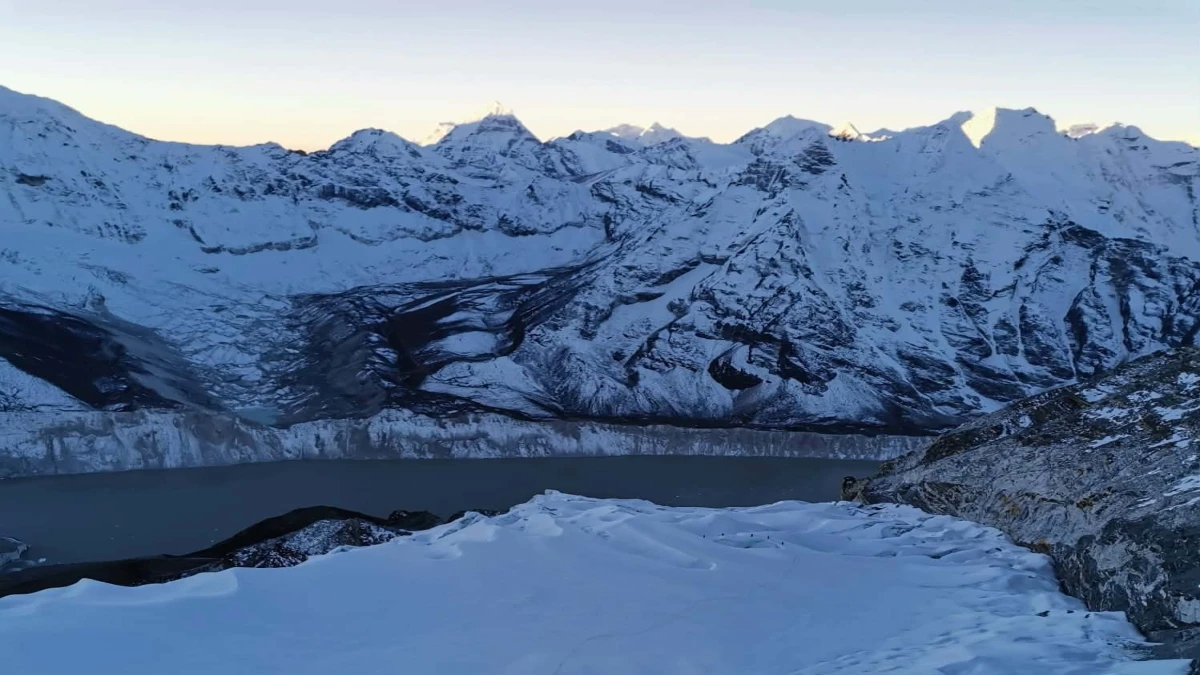
Then the sky starts to glow. By sunrise, you reach the narrow summit ridge. One last push, and now you step onto the top at 6,189 m. Lhotse, Makalu, Baruntse, and Ama Dablam stand all around you. The Imja Glacier shines far below.
Many climbers cry here, some laugh, while some just stand there and take it all in. Then you head down. You feel tired but really proud.
Island Peak Summit Day: What to Expect
Summit day is the longest day of the trip. It is also the one you will remember most. Here is how it usually goes.
- Midnight Wake-Up: Your guide wakes you around midnight or 1 am. It is dark and very cold. You eat a light breakfast, drink hot tea, and pack your bag. Check your gear one more time. Your guide will check it too.
- The Rocky Climb in the Dark: You start walking with your headlamp on. The path goes up a rocky ridge. It is slow and steady. Don't rush because a calm pace saves your energy for later. After a few hours, you reach the base of the glacier.
- Crampons and Rope: Here you stop and put on your crampons. Your guide ties you to the rope. Now you are a team. You walk across the glacier in a line. Your guide points out the cracks and shows you where to step. The ice creaks under your boots. It feels strange at first. Soon it feels like fun.
- The Headwall: Then you see a steep wall of snow and ice rising in front of you. This is the hardest part. You clip your ascender onto the fixed rope. Slowly push it up and breathe. At the top of the headwall, the slope eases. You have done the hardest part.
- The Summit Ridge: A narrow ridge leads to the top. The steep drop is on both sides, so you should move carefully. The air is thin, and every step feels heavy. Then, now you are on the summit of Island Peak at 6,189 m. Take photos and feel proud because you earned this.
- The Way Down: Going down takes a few hours. You rappel the headwall, walk back across the glacier, and follow the ridge to camp. Most climbers get back to Base Camp by early afternoon. Tired but happy.
Helicopter Return from Chhukung to Lukla
You just stood on Island Peak; your legs are tired, and your boots feel like bricks. Now you have two choices. Walk for days or fly. And you choose to fly. That is the helicopter return to Lukla. And it is the best way to end this trip.
How It Works
On Day 16, your guide checks the weather early in the morning. If the sky is clear, the helicopter lands at Chhukung. You hop in, buckle up, and take off.
The flight takes about 15 to 20 minutes. You fly over Dingboche, Tengboche, and Namche Bazaar. Days of walking pass by in minutes. Then you land in Lukla.
Why Trekkers Love Helicopter Return from Chhukung to Lukla
- Saves 3 to 4 days: No long walk back down the Khumbu Valley.
- Easy on your knees: After a big climb, your legs will thank you.
- Amazing views: You see Ama Dablam, Everest, and the whole valley from above.
- Safer if someone is unwell: A tired or sick trekker can get down fast.
- Less stress: You make your flight home on time, with a calm mind.