Introduction to Manaslu Circuit Trek
The Manaslu Circuit Trek is a walk around Mount Manaslu. It is the eighth-highest mountain in the world. You cross Larkya La Pass at 5,106 meters, walk through Tibetan Buddhist villages, and you’ll meet far fewer trekkers here than on Annapurna or Everest.
It is a moderate to hard trek. You need a special permit and a licensed guide to trek around Manaslu. I’ve walked this trail many times, and I would do it again. In this guide, I have shared everything that a trekker needs to know before going on the Manaslu Circuit Trek. The route, days, cost, permits, and packing list. Read it from the top, or jump to what you need.
What Makes the Manaslu Circuit Trek Different From Other Nepal Treks?
The Manaslu Trek is quieter, wilder, and more Tibetan than other popular treks in Nepal. It is a restricted area, so fewer people walk it. You get real mountain villages, a high pass and a giant mountain over your head, without seeing the long lines of trekkers.
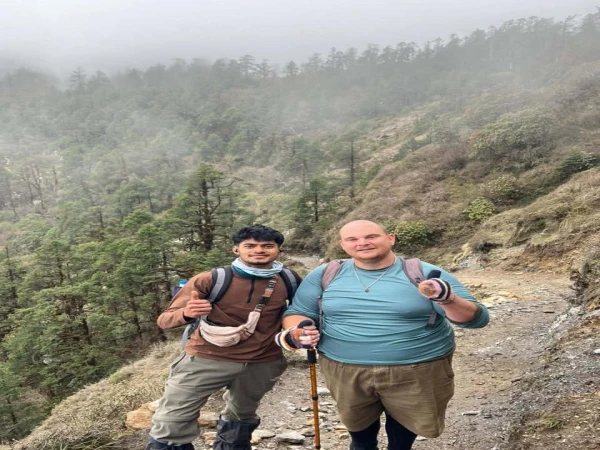
The first morning always feels different. It was just the river, the wind and our own footsteps. On the Annapurna Circuit Trek and the Everest Base Camp trail, I had to share the path with other trekkers too. Here, I often had it to myself, and very few trekkers were around me.
Here are a few things that made the Manaslu Circuit Trek different from Other Treks in Nepal:
- The quiet environment: You need a special permit and a guide for this trek. Fewer trekkers trek here, so the trail never feels packed.
- The villages: In Lho, Samagaon, and Samdo, I saw prayer flags on every roof and long mani walls along the path. People still live here in the old Tibetan way.
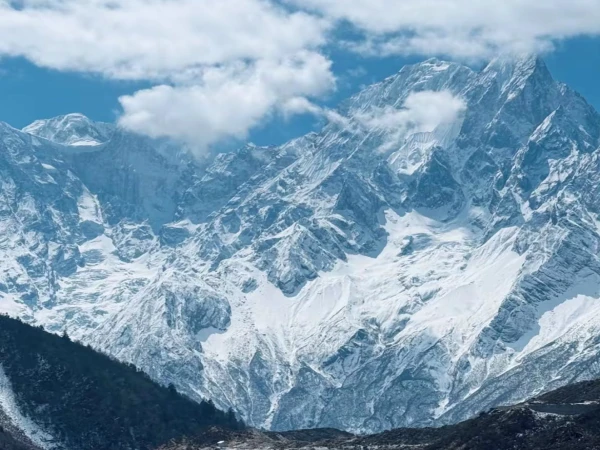
- The mountain: Manaslu is 8,163 meters tall, the eighth highest in the world. From Samagaon, Mount Manaslu fills the sky.
- The Larkya La pass: Larkya La is at 5,106 meters and is the hardest day. It is also the one I talk about the most when I think about the trek.
- The landscape changes: In just a few days, I went from warm green valleys to cold, rocky highlands. It felt like walking through different countries.
It is not the cheapest trek, because of the permit and guide rules. But I would pay it again for the peace. If you want a Himalayan trek that still feels like an adventure, go to Manaslu for sure.
What Does the Manaslu Circuit Trek Actually Look Like?
The Manaslu Circuit Trek is a loop. It follows a river from a warm green valley at about 700 meters up to a cold, rocky pass at 5,106 meters. The view almost changes every day. Here is how the Manaslu Circuit Trek looked to me:
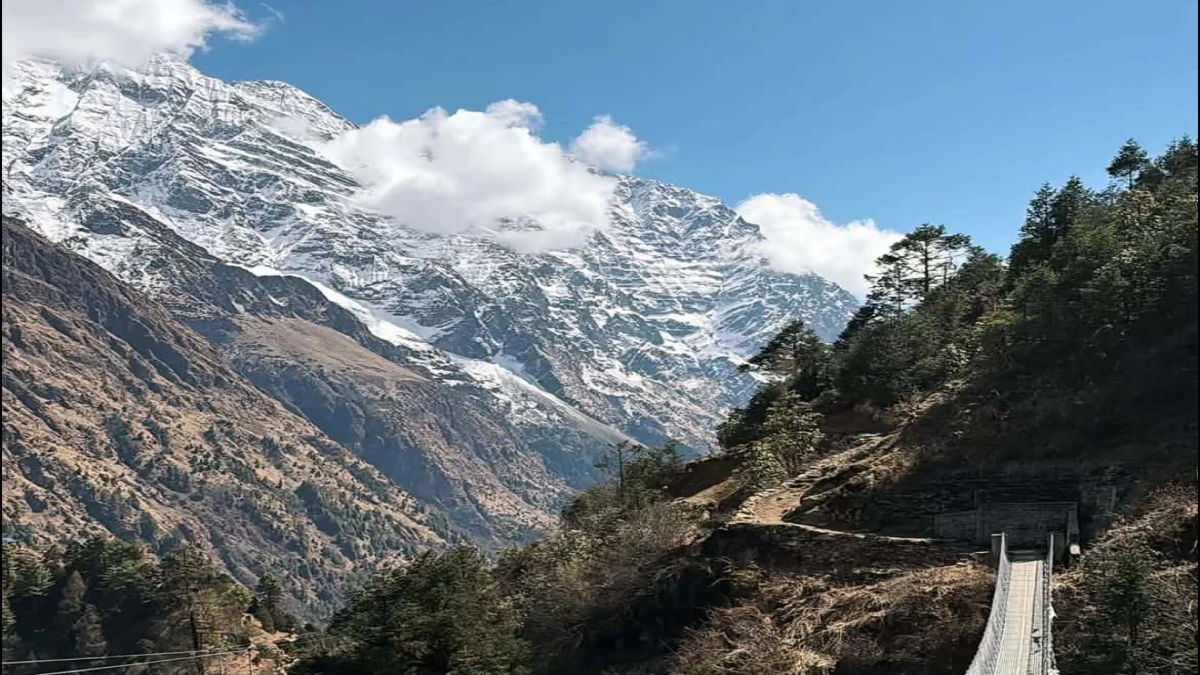
- The first few days, there are rivers, waterfalls, and long suspension bridges.
- During the middle days, you’ll see forest, stone villages, and mani walls.
- Higher up, the views are of barley fields, yaks, prayer flags, and Manaslu in the sky.
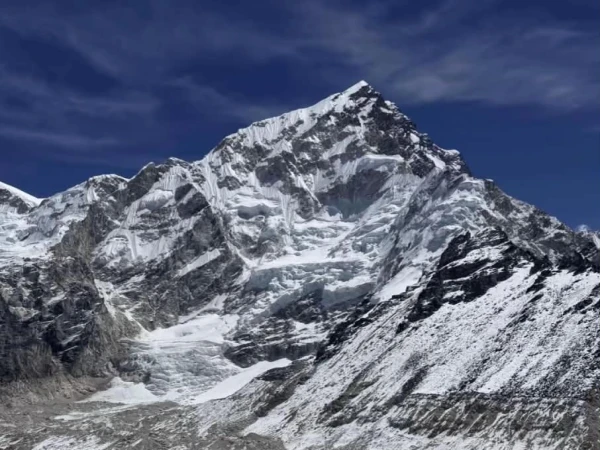
- On the Larkay La Pass day, you will see ice and mountains in every direction.
I remember how quickly the landscape changed. In just one week, I went from shorts to a down jacket.
Manaslu Circuit Trek Route
The Manaslu Circuit Trek route starts at Maccha Khola and ends at Dharapani. You walk one way around Mount Manaslu and cross Larkya La Pass at 5,106 meters. Most trekkers finish it in 12 to 16 days.
When I walked it, I liked that we never went back on the same path. The route started at Machha Khola and ended at Dharapani. Every day felt new.
The main stops of the Manaslu Circuit Trek
- Machha Khola (869 m)
- Jagat (1,400 m)
- Deng (1,350 m)
- Namrung (2,165 m)
- Lho (3,180 m)
- Samagaon (3,530 m): Rest day here.
- Samdo (3,875 m)
- Dharamsala (4,460 m): Sleep here before the pass.
- Larkya La Pass (5,106 m)
- Bimthang (3,590 m)
- Tilije (2,300 m)
- Dharapani (1,860 m): The end of the trek.
Road work has reached some of the early sections. Jeeps may now go further up from Maccha Khola near Jagat Village.
How Many Days Do You Need for the Manaslu Circuit Trek?
Most trekkers need 14 days for the Manaslu Circuit Trek, counting the walk only. Add 2 to 3 days for Kathmandu, travel, and a spare day, and your whole trip is about 16 to 17 days. Fit trekkers can finish in 12 days. A slower, safer plan takes 16 days or more.
I’d say 14 days is the sweet spot. Even I did the Manaslu Circuit Trek in 14 days. You can walk at a calm pace, rest once in Samagaon, and still have energy for Larkya La. You can pick the plan that fits you:
- 12 days: Best for trekkers with less time. It is fast, with short rests and long walking days. Only for strong, well-trained trekkers.
- 14 days: The best balance for the Manaslu Circuit Trek. It includes a rest day at Samagaon and has a normal pace.
- 16 days: It gives you a second rest day for altitude, or a spare day if the pass is closed by weather.
- 18 days or more: Best for trekking Manaslu with the Tsum Valley side trip.
My advice: add one extra day to your plan. Most people who skip the buffer regret it.
Which Villages and Cultural Experiences Make Manaslu Special?
The villages of Namrung, Lho, Samagaon, and Samdo make the Manaslu Circuit Trek special. People here follow Tibetan Buddhism, and you feel it everywhere. There are prayer flags on the roofs, mani walls along the trail, and monasteries above the fields.
I remember how different the air felt once we passed Namrung. The valley went quiet, and the culture changed with it. Here are some villages worth your time:
- Namrung: It’s a calm stop where the Tibetan way of life starts to show. You will see stone houses and prayer wheels along the paths.
- Lho: A peaceful village with a gumba and an early, clear view of Manaslu.
- Samagaon: This is the biggest village on the trail. You can spend your rest day here and walk to Pungyen Gumba or Birendra Lake.
- Samdo: It is a high, windy village close to the Tibet border. It feels like the end of the road.
Small things to remember:
- Walk clockwise around mani walls and stupas. Keep them on your right.
- Spin the prayer wheels as you pass.
- Greet people with “Namaste” or “Tashi Delek”.
- Ask before taking photos of people or inside a gumba.
- Buy tea or snacks in small village shops. It helps local families.
Take your time in these villages. They are the reason many people fall in love with this trek.
What Is Crossing Larkya La Like?
Crossing Larkya La is a long, cold, and tiring day, but also the best day of the Manaslu Circuit Trek. You leave Dharamsala around 3 or 4 am, climb to 5,106 meters, then walk down to Bimthang. The whole day takes about 8 to 10 hours.
I remember the dark start. It was freezing, and all I could see was the small circle of my headlamp. I walked slowly and kept my eyes on my guide’s boots.
How the day goes:
- Before sunrise: It’s just a steady climb in the dark. Your hands and nose get cold fast.
- Around sunrise: The light hits the peaks. This is when you forget how tired you are.
- At the top: Prayer flags flap in the wind. Manaslu, Himlung, and other big mountains stand around you.
- The way down: It is long and steep. It is also hard on the knees, so poles help a lot.
- Bimthang: It is the green valley, where you get warm meals. That feels amazing.
Some tips that can help you:
- Wear warm layers, a hat, and good gloves.
- Keep water and snacks within reach.
- Walk slowly and take short breaks.
- Listen to your guide. If the weather turns bad, they may stop the crossing.
If that happens, don’t fight it. The pass will still be there tomorrow.
How Difficult Is the Manaslu Circuit Trek for a First-Time Trekker?
The Manaslu Trek is moderate to hard for a first-timer. You don’t need climbing skills, but you do need good fitness and time to adjust to the altitude. The hardest parts are the long walking days, the cold, and the Larkya La crossing at about 5,106 meters.
I’ll be honest, it is not an easy first trek. But with training and a slow pace, many first-timers finish it happily.
What makes the Manaslu Circuit Trek hard:
- Long walking days: You walk 5 to 7 hours on most days, and pass day is much longer.
- Up-and-down trail: The path climbs and drops a lot, especially in the lower valley.
- Altitude: You sleep above 3,500 meters for several nights, and the air is thin.
- Cold nights: Nights near Samdo and Dharamsala are very cold.
- Basic comfort: Rooms are simple, and showers are rare higher up.
What makes the Manaslu Circuit Trek easier:
- The trail is a real path, not a climb, so no ropes or technical skills are needed.
- You’ll carry only a day pack if you hire a porter.
- A rest day at Samagaon helps your body adjust.
- Your guide sets a slow pace and watches the weather.
Take it slow, drink water, and tell your guide if you feel unwell. Most first-timers who prepare well do just fine.
How Should You Prepare for Altitude on the Manaslu Circuit Trek?
The best way to prepare for altitude on the Manaslu Circuit is to walk slowly, rest at Samagaon, drink plenty of water, and go down if symptoms get worse. You’ll sleep above 3,500 meters for several nights and cross Larkya La at about 5,106 meters, so your body needs time to adjust.
I walked slowly, even when I felt strong. Some people in faster groups got headaches by Samdo. Slow and steady worked better.
What helps in High Altitude?
- Take a rest day at Samagaon. Use it for a short walk, then come back to sleep lower.
- Go slow: Don’t race ahead. If you can’t talk while walking, you’re too fast.
- Drink water all day: Many trekkers drink 3 to 4 liters a day. It helps a lot.
- Skip alcohol and sleeping pills at high camps.
- Eat even if you’re not hungry. Dal bhat and soup help.
- Tell your guide early. Don’t wait until you feel really bad.
Mild signs to watch for Altitude Sickness are: headache, feeling sick or dizzy, Poor sleep, no appetite, and more. If you have these, inform your guide immediately. Rest and don’t climb higher.
Danger signs of Altitude Sickness are: A bad headache that won’t go away, Confusion or trouble walking straight, Breathlessness while resting, A wet and bubbling cough, etc. Going down is the cure for these symptoms. Don’t wait until morning.
Some trekkers take Diamox to help. Talk to your doctor before the trip, since it isn’t right for everyone. Buy travel insurance that covers helicopter rescue at altitude.
When Is the Best Time for the Manaslu Circuit Trek?
The best time for the Manaslu Circuit Trek is Autumn (late September to November) and Spring (March to May). The skies are clearer, and the weather is steadier in these months, which matters most on Larkya La. October is the most popular month.
I would again pick October if I did it again. The air is clean, the days are dry, and the mountains look sharp.
- Autumn (late September to November): Autumn brings clear skies, great views, and stable weather. It is also the busiest time, so book early. Late November gets very cold at the high camps.
- Spring (March to May): During this time, days are warmer, and you’ll see rhododendron flowers in the lower forest. Views can be hazy, and afternoons may bring clouds.
- Monsoon (June to August): Monsoon brings heavy rain, leeches, slippery trails, and landslides. The views are often hidden. Most people skip this season.
- Winter (December to February): Winter is very cold, with snow on the trail. Larkya La can close, and some teahouses shut.
Which season should you pick for the Manaslu Circuit Trek?
- If you want the best views, go in October or early November.
- Want flowers and warmer days, then go in April or early May.
- If you want fewer people, then try late March or early May.
Weather in the mountains can change fast, even in the best months. Keep a spare day in your plan in case the pass is closed.
Manaslu Circuit Trek Permits
You need three permits for the Manaslu Circuit Trek. Your trekking company applies for them, because you can’t get the restricted permit on your own. The permits you need are:
- Restricted Area Permit (RAP): This is the main permit. The price depends on the season and the number of days you spend in the restricted area. It costs the most in autumn, around USD 115 per person. December to August costs USD 85 per person.
- Manaslu Conservation Area Permit (MCAP): For the Manaslu Conservation Area. It roughly costs around USD 25 to 30.
- Annapurna Conservation Area Permit (ACAP): Needed for the last stretch near Dharapani. It costs around USD 25 to 30.
Can You Trek the Manaslu Circuit Solo or Do You Need a Guide?
You can’t trek the Manaslu Circuit solo. It is a restricted area, so you must hire a licensed guide through a registered trekking company. The restricted permit is not issued to individual trekkers on their own.
At first, I wanted to go without a guide. After the trek, I was glad I had one. The trail splits, weather changes fast, and our guide knew every village.
How guide help on the Manaslu Circuit?
- They handle permits and checkpoints.
- The guide watches the weather, especially on Larkya La.
- They spot altitude sickness early.
- A guide speaks the local language and knows the teahouses.
Can you go alone with a guide?
Older rules required at least two trekkers on one permit. But rules have shifted recently, so yes, you can go alone, but a licensed guide is mandatory.
How Much Does the Manaslu Circuit Trek Cost?
TheManaslu Circuit Trek costsabout USD 1,000 to 2,500 per person for a guided trip. The price depends on the season, group size, days, and comfort level. Autumn costs more because the restricted permit is higher then.
I spent more than I planned, mostly on small things along the way. A little extra cash saves you stress.
What the package price usually includes:
- Permits (RAP, MCAP, ACAP)
- Licensed guide and a porter if you add one
- Teahouse rooms and meals
- Transport to the start and back from the end
What it often doesn’t include:
- Hot showers and phone charging
- Snacks, drinks and extra tea
- Tips for your guide and porter
- Travel insurance with helicopter rescue
- Gear rental or purchase
- Kathmandu hotel and meals
Quick ways to save:
- Go with a group of two or more, since costs are shared.
- Rent heavy gear in Kathmandu.
Don’t pick the cheapest offer. A very low price may mean a weak guide or poor safety.
How Do You Reach the Starting Point of the Manaslu Circuit Trek?
You reach the Manaslu Circuit Trek start by road from Kathmandu. Most trekkers drive to Machha Khola by jeep or bus. The drive takes about 7 to 9 hours on a rough road, so leave early in the morning. You’ll get tired, but the view of the river makes it worth it.
- Start: Kathmandu to Machha Khola or even higher. Your trekking company arranges the vehicle.
- Route: The road goes through Dhading and Arughat, then turns rough and narrow.
- End: The trek finishes at Dharapani. A jeep takes you down to Besisahar, and then you drive to Kathmandu or Pokhara.
Things to know:
- Road work is moving up the valley, so jeeps may go further than before. Your starting point can change from year to year.
- Rain and landslides can delay the drive, especially in monsoon.
- Keep a spare day in your plan at both ends.
What Is Daily Life Like on the Manaslu Circuit Trek?
A day on the Manaslu Circuit Trek is simple. You wake up early, walk 5 to 7 hours, eat, rest, and sleep early. There are no cars, no rush, and very little screen time. It is just you, the trail, and the mountains. The slow rhythm is my personal favorite part of the trek.
A normal day on the Manaslu Circuit Trek looks like this:
- 6:00 am: Wake up, pack your bag, and drink tea.
- 7:00 am: Breakfast, then start walking.
- 12:00 pm: Lunch at a teahouse.
- Afternoon: Walk a bit more, then reach the village by 3 or 4 pm.
- Evening: Wash up, rest, and sit by the stove.
- 6:30 pm: Dinner, a card game or a chat with other trekkers.
- 8:00 pm: Get on your bed, because you’ll be tired.
Things you’ll notice:
- Mornings are cold, and afternoons can be warm.
- Phone signal is weak or missing in many places.
- Hot water and charging usually cost extra.
- Your guide will explain the plan each evening.
Pass day and rest day look different, but the rhythm stays the same.
Teahouses and Food on the Manaslu Circuit Trek
Teahouses on the Manaslu Circuit are simple but friendly. You’ll get a small room with twin beds, shared toilets, and hot meals. Food is basic and filling, with dal bhat as the favorite. Rooms get colder and plainer as you go higher.
What the teahouses are like on the Manaslu Circuit Trek:
- Rooms: Small, with twin beds and thin walls. Bring a warm sleeping bag.
- Toilets: Mostly shared. Some are outside the room.
- Hot showers: It is often available lower down, but they cost extra.
- Charging: Charging is usually paid, and the power can be weak.
- Wi-Fi: It is slow or missing, especially after Samagaon.
- Cold: Dining rooms have a stove, but bedrooms are not heated.
Foods you’ll eat on the Manaslu Circuit Trek:
- Dal bhat (rice, lentils and vegetables), often with free refills
- Noodle soup and fried noodles
- Tibetan bread and eggs
- Porridge, pancakes and tea
What Should You Pack for the Manaslu Circuit Trek?
Pack warm, light, and simple for the Manaslu Circuit Trek. You need layers, a down jacket, a good sleeping bag, broken-in boots, and a headlamp. Nights near Samdo and Dharamsala are very cold, so warm gear matters more than extra clothes.
Clothes:
- Base layers (top and bottom)
- Fleece or warm mid-layer
- Warm down jacket
- Waterproof jacket and pants
- Trekking pants and 2 to 3 shirts
- Warm hat, gloves, and a sun hat
- Wool socks (3 to 4 pairs)
Gear:
- Broken-in trekking boots
- Sleeping bag rated for cold nights (rent in Kathmandu if needed)
- Trekking poles
- Headlamp with spare batteries
- Day pack (your porter carries the big bag)
- Water bottle and purification tablets
- Sunglasses and sunscreen
- Lip balm
Health and extras:
- Basic medicine kit and any personal medicines
- Blister tape
- Power bank
- Passport copies and permit copies
- Cash for the trail
- Travel insurance that covers high-altitude trekking and helicopter rescue
Rent or buy in Kathmandu: Heavy items like down jackets and sleeping bags are easy to rent. It saves money and bag space.
Is the Manaslu Circuit Trek Worth It?
Yes, the Manaslu Circuit Trek is worth it if you want a quiet, wild Himalayan trek with real villages and a big pass. It is not easy, and it costs more than some treks. But the silence, the Tibetan culture, and the view from Larkya La are hard to find anywhere else in Nepal.
I still think about that cold morning on the pass. I was tired, and my fingers were numb, but I would walk it again tomorrow.
If you’re ready, start small. Pick your season, train for a few months, and ask a licensed trekking company for a current quote. Then pack warm and take your time. The mountain will do the rest.