Manaslu Circuit Trek with Serang Gumba

Manaslu Circuit Trek with Serang Gumba
Quick Overview
Duration16 Days
Trip GradeModerate
CountryNepal
Maximum Altitude5,106 m
Group Size1-20
StartsKathmandu
EndsKathmandu
ActivitiesTrekking
Best TimeSpring and Autumn

Manaslu Circuit Trek with Serang Gumba Overview

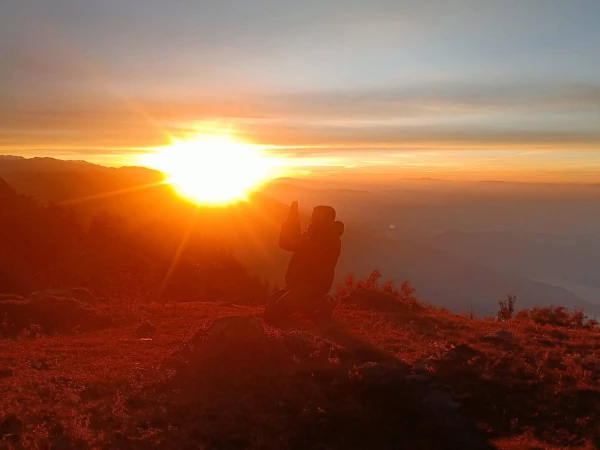
Most people trek the Manaslu Circuit for the mountains. But this version adds Serang Gumba.Manaslu Circuit Trek with Serang Gumba not only takes you through mountains and villages, but it also gives you a glimpse of traditional Buddhist communities and monasteries. 

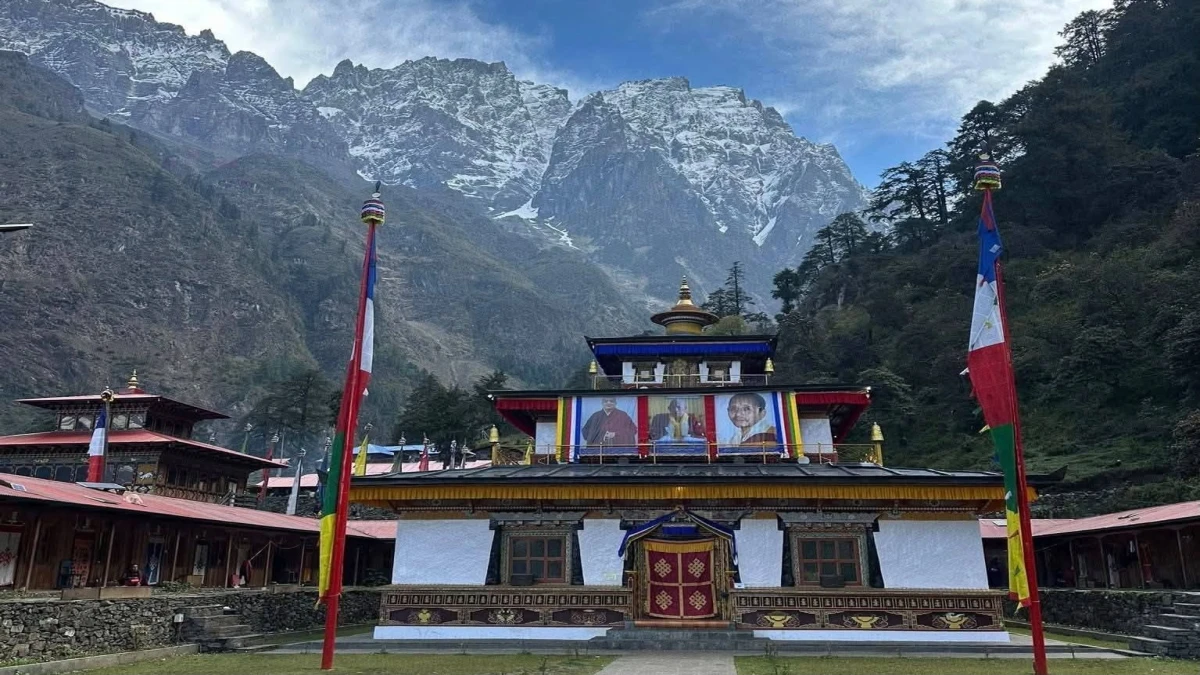
Serang Gumba is a Tibetan Buddhist monastery. You leave the main trail of theManaslu Circuit Trek and climb to Serang Gumba. This monastery is more than 500 years old. Few trekkers trek here because most people just stay on the main trail. 

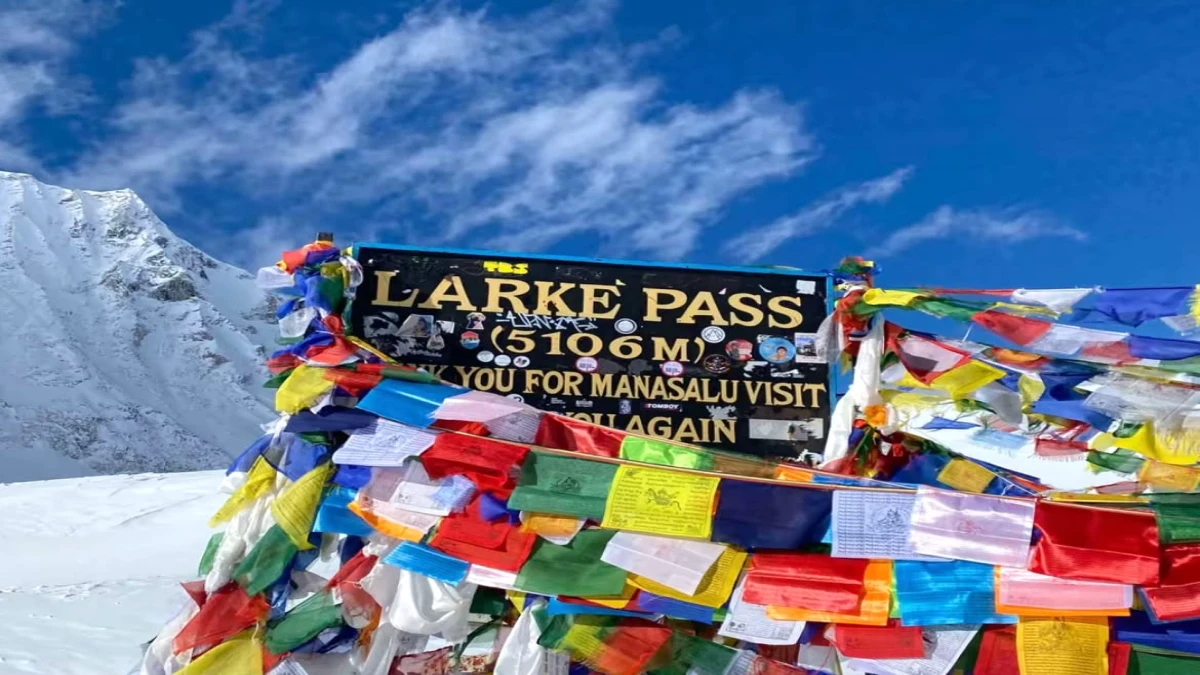
From there, you walk back and rejoin the Manaslu Trail toward Samagaon, with Mt. Manaslu (8,163 m) filling the sky. You will then continue over Larkya La Pass at 5,106 m. The full trek takes about 16 days from Kathmandu, and the route runs through a restricted area, so you need permits and a licensed guide.

Is Serang Gumba Worth Adding to the Manaslu Circuit? 

Yes, adding Serang Gumba to the Manaslu Circuit is worth it if you want to experience more than the usual trekking route. The Serang monastery offers a different side of the Manaslu region. You can explore Buddhist culture, traditional mountain life, and peaceful surroundings, along with beautiful mountain views.

Here’s why it is worth adding to the Manaslu Circuit:

  • Explore a less-visited Place: The main Manaslu trail might get busier during the main trekking season. But Serang Gumba is one of the least visited places on the route.
  • Tibetan Buddhist Culture: Visit an ancient Buddhist monastery like Serang Gumba, observe local traditions, and learn about the lifestyle of the people living there.
  • No extra permit: Your Manaslu permit already covers the route to Serang Gumba, so no extra permit is needed. 
  • Enjoy a peaceful environment:  You’ll get a chance to spend some time on peaceful trails and enjoy the calm atmosphere of the monastery. 
  • Old history: The monastery is over 500 years old. So, explore this ancient monastery hidden in a remote valley. 
  • Different altitude and landscape: Serang Gumba sits at around 3,100 m and offers a beautiful mountain setting away from the main trail. 

Add Serang Gumba if you like culture and quiet places, and you have a few spare days. You can also skip it if your time is short, or if you only want the Larkya La Pass and the mountain views.

How the Serang Gumba Route Differs from the Regular Manaslu Circuit 

The Manaslu Circuit Trek route and Serang Gumba route are the same for most of the trek. They trail split at Bihi village (2,130 m). On the regular Manaslu Circuit, you stay on the main trail. You continue your walk to Ghap and Namrung.

But on the Serang Gumba route, you leave the main trail at Bihi. Then you climb towards the  Serang monastery at 3,100 m and stay overnight there. The next day you walk down from the monastery to Ghap and rejoin the main Manaslu Circuit trail.

After that, both routes are the same. You pass Samagaon and Samdo,cross Larkya La Pass (5,106 m), and finish at Tilje.

Here's how the Serang Gumba Route Differs from the Regular Manaslu Circuit:


Regular Manaslu Circuit

With Serang Gumba

Route

Stay on the main trail

Side trail from Bihi to the monastery

Extra time

None

1 to 2 days

Extra climb

None

About 970 m up from Bihi

Trail crowds

Busy in peak season

Few trekkers on the side trail

Cultural stop

Villages and monasteries on the way

A 500-year-old monastery stay

Rooms Teahouse

Basic monastery stay

Permits Standard

Same permits

Serang Gumba: A Cultural and Spiritual Experience in the Manaslu Region

Serang Gumba is a Buddhist monastery above Bihi village. It is over 500 years old, and very few trekkers visit here. Those who visit sleep inside the monastery, share tea with the monks, and hear the evening prayers. 

Where Is Serang Gumba Located?

  • Region: Nubri Valley, in the Manaslu Conservation Area, northern Gorkha.
  • Altitude: about 3,100 m.
  • Starting point: Bihi village (2,130 m) on the main Manaslu trail.
  • The walk: 5 to 6 hours uphill, about 10 km. The path is steep and goes through forest.
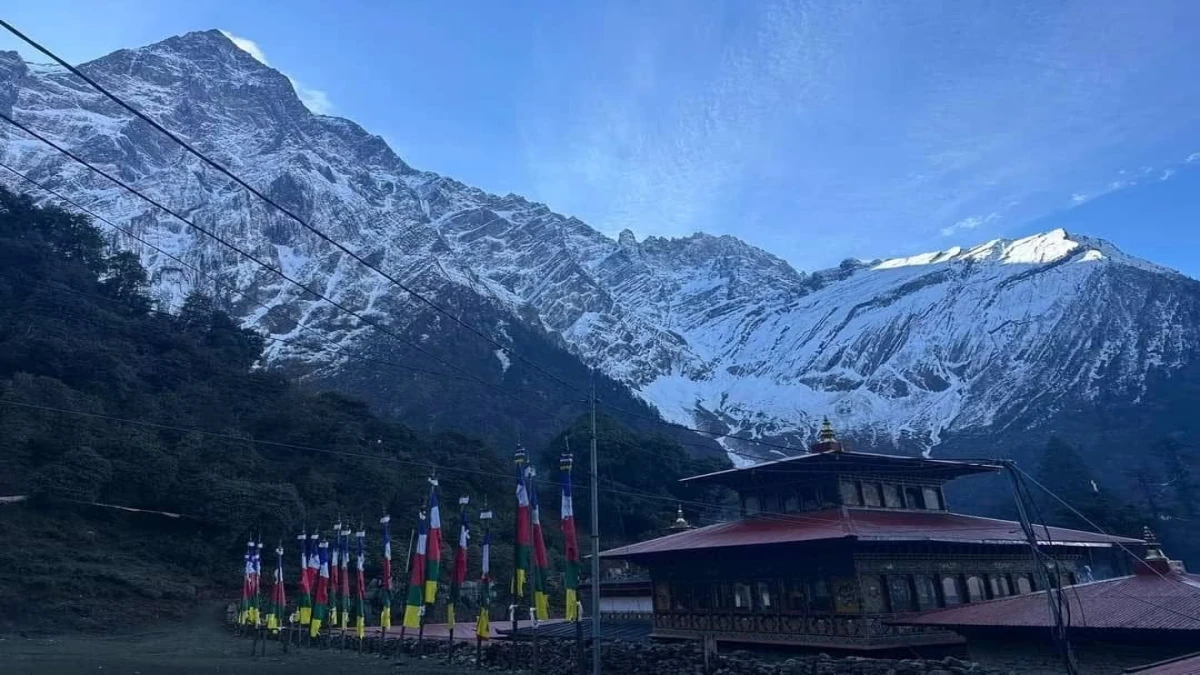
  • The setting: The monastery is located on a natural hillside, with beautiful views of pine forests and the high Himalayan mountains.
  • Last lodge: Bihi has the last proper teahouses before the monastery.

What Makes Serang Gumba Special?

  • The monastery is more than 500 years old. It is linked to the Buddhist master Chokyi Gyaltsen.
  • The gumba still feels alive. Monks live and pray here every day. It is not a museum.
  • The side trail is off the main route. Since very few groups come here, it is quiet.
  • You sleep inside the monastery and not in a teahouse.

Can You Stay Overnight at Serang Gumba?

Yes, you can stay overnight at Serang Gumba. The monastery runs a simple guesthouse, managed by the monks. Your guide can arrange the stay as part of the trek.

The accommodation is simple compared to the other teahouses along the main Manaslu Circuit trail. You can expect basic rooms, simple bedding, and shared facilities. Meals can also be arranged at the monastery. 
Manaslu Circuit Trek with Serang Gumba Itinerary

Trip PlanExpand all
  • Driving distance: about 160 km
  • Driving time: 8 to 9 hours by bus, 7 to 8 hours by private jeep

The trip starts with a long drive from Kathmandu. The road is paved at first, then turns rough and dusty after Arughat. You can enjoy a scenic ride from your seat. In the evening, you sleep in a riverside lodge

Max Altitude: 1,350 m to 870 m Meals: Lunch and DinnerAccommodation: Lodge in Machha Khola
  • Trekking distance: about 21 km
  • Trekking time: 6 to 7 hours

Today is the day when your trek starts. You walk up the Budhi Gandaki Valley. The trail crosses small streams and passes through villages and over suspension bridges. As you reach near Jagat, the landscape becomes more rugged. Jagat is a traditional stone-built village and an important checkpoint for trekkers entering the Manaslu Conservation Area. 

Max Altitude: 870 m to 1,340 m (gain about 470 m) Meals: Breakfast, Lunch, and DinnerAccommodation: Teahouse in Jagat
  • Trekking distance: about 17 km
  • Trekking time: 6 to 7 hours

After Breakfast, you leave Jagat and continue the trek. The trail passes through traditional villages, waterfalls, and terraced fields. The valley gets narrower, and the forest gets thicker. This is a long day with ups and downs along the river.

Max Altitude: 1,340 m to 1,860 m (gain about 520 m) Meals: Breakfast, Lunch, and DinnerAccommodation: Teahouse in Deng
  • Trekking distance: about 10 km
  • Trekking time: 4 to 5 hours

This is a relatively short trekking day. From Deng, you will cross the Budhi Gandaki River and follow a forested trail through small settlements and hillside paths. You reach Bihi Village in the afternoon. This is the village from which the Serang Gumba trail starts. Use the afternoon to rest and sort your gear.

Max Altitude: 1,860 m to 2,130 m (gain about 270 m) Meals: Breakfast, Lunch, and DinnerAccommodation: Teahouse in Bihi
  • Trekking distance: about 10 km
  • Trekking time: 5 to 6 hours

This is one of the steepest climbs of the trek. The trail leaves the main Manaslu route at Bihi and climbs uphill through forests and mountain settlements towards Serang Gumba. You gain around 970 m in altitude, so the walk can feel challenging. Start early, maintain a steady pace, and take short breaks when needed. You will spend the night at the monastery.

Max Altitude: 2,130 m to 3,100 m (gain about 970 m) Meals: Breakfast, Lunch, and DinnerAccommodation: Basic stay at Serang Gumba
  • Trekking distance: 12 to 14 km
  • Trekking time: 6 to 8 hours

After spending the morning at Serang Gumba, you begin the long descent towards Ghap. The trail passes through forests and hillside paths before rejoining the main Manaslu Circuit route. You lose around 930 m in altitude, which can put pressure on your knees, especially on the steeper sections. Trekking poles can help you maintain balance and reduce pressure on your legs. Take your time and walk carefully.

Max Altitude: 3,100 m to about 2,170 m (loss of about 930 m) Meals: Breakfast, Lunch, and DinnerAccommodation: Teahouse in Ghap
  • Trekking distance: 15 to 17 km
  • Trekking time: 6 to 7 hours

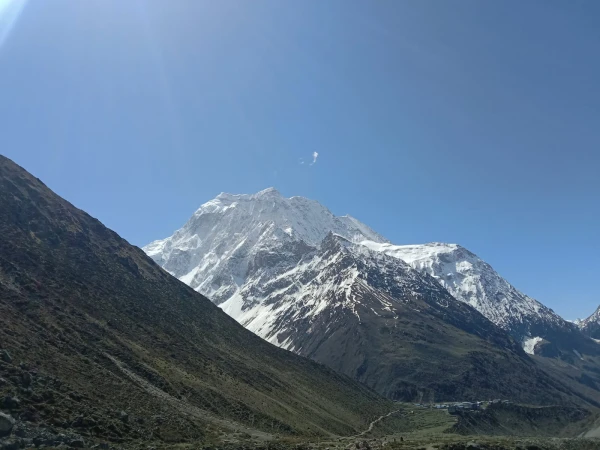
You rejoin the main trail and pass Namrung. The trail climbs all day. In Lho, you get your first clear view of Manaslu.

Max Altitude: about 2,170 m to 3,180 m (gain about 1,010 m) Meals: Breakfast, Lunch, and DinnerAccommodation: Teahouse in Lho
  • Trekking distance: about 5 km to Shyala, plus the Pungyen side trip
  • Trekking time: 3 to 5 hours, including the visit

Today, you leave Lho and walk towards Shyala, a beautiful village surrounded by mountain views. From the Shyala area, you take a side trip to Pungyen Gumba, a peaceful Buddhist monastery located higher up at around 3,870 m. The visit adds extra uphill and downhill walking to your day, so allow enough time for the detour. You can enjoy views of Mt. Manaslu and the surrounding peaks before returning to Shyala for the night.

Max Altitude: 3,180 m to 3,500 m (Pungyen Gumba is at 3,870 m) Meals: Breakfast, Lunch, and DinnerAccommodation: Teahouse in Shyala
  • Trekking distance: about 4 km
  • Trekking time: 2 to 3 hours, plus the lake visit

A short walk to Samagaon, the biggest village in the upper valley. Visit Birendra Lake in the afternoon. It is a gentle walk from the village.

Max Altitude: 3,500 m to 3,530 m Meals: Breakfast, Lunch, and DinnerAccommodation: Teahouse in Samagaon
  • Optional hike: Manaslu Base Camp
  • Hiking time: about 8 hours round trip

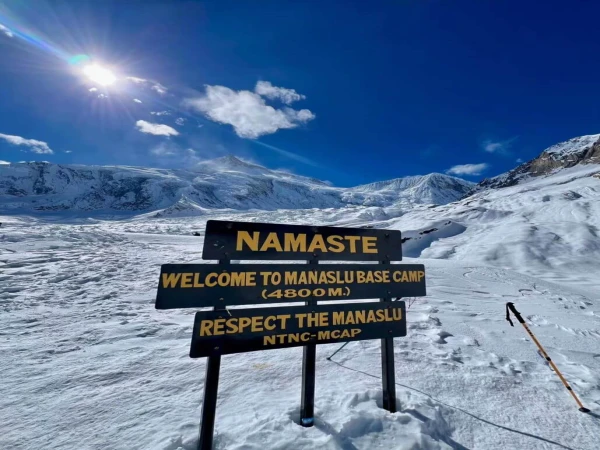
Today is an acclimatization day. You can take an optional hike to Manaslu Base Camp if you feel fit and well. The hike is quite demanding, so you can also choose a shorter walk around Samagaon or rest in the village. Listen to your body and follow your guide's advice.

Max Altitude: about 4,400 m (sleep at 3,530 m) Meals: Breakfast, Lunch, and DinnerAccommodation: Teahouse in Samagaon
  • Trekking distance: about 8 km
  • Trekking time: 3 to 4 hours

You walk across open highland with big mountain views. Samdo is the last permanent village before the pass.

Max Altitude: 3,530 m to 3,850 m (gain about 320 m) Meals: Breakfast, Lunch, and DinnerAccommodation: Teahouse in Samdo
  • Optional hike: Tibetan border viewpoint
  • Hiking time: 4 to 6 hours

Take an optional day hike toward the Tibetan border. Climb high, then come back down to sleep. This prepares you for the pass. If you feel tired or experience any symptoms of altitude sickness, you can also take a rest instead of going higher

Max Altitude: hike higher, sleep at 3,850 m Meals: Breakfast, Lunch, and DinnerAccommodation: Teahouse in Samdo
  • Trekking distance: about 7 km
  • Trekking time: 4 to 5 hours

A short, steady climb to Dharamshala, also called Larkya Phedi. This is your highest sleeping point. Go to bed early, because tomorrow starts before dawn.

Max Altitude: 3,850 m to 4,460 m (gain about 610 m) Meals: Breakfast, Lunch, and DinnerAccommodation: Basic teahouse in Dharamshala
  • Trekking distance: about 16 to 20 km
  • Trekking time: 8 to 10 hours

This is the longest and most challenging day of the trek. You start very early, usually around 3 to 4 AM, while it is still dark. The trail gradually climbs from Dharamshala towards Larkya La Pass at 5,106 m. The morning can be extremely cold and windy, so warm clothing, a headlamp, and proper trekking gear are important.

After reaching the pass, you can enjoy the incredible views of the surrounding Himalayan peaks. Then, you begin the long descent towards Bimthang. The downhill section is tiring, especially after several hours of walking at high altitude. Take your time and follow your guide's instructions. You will spend the night at a teahouse in Bimthang.

Max Altitude: 4,460 m up to 5,106 m (gain about 650 m), then down to 3,720 m (loss about 1,390 m) Meals: Breakfast, Lunch, and DinnerAccommodation: Teahouse in Bimthang
  • Trekking distance: about 20 km
  • Trekking time: 6 to 7 hours

A long walk downhill. The landscape changes from rock to forest, with rhododendrons and farms.

Max Altitude: 3,720 m to 2,300 m (loss of about 1,420 m) Meals: Breakfast, Lunch, and DinnerAccommodation: Teahouse in Tilje
  • Driving distance: about 200 km to Kathmandu
  • Driving time: 8 to 9 hours to Kathmandu

After breakfast, you leave Tilje and take a jeep towards Dharapani. From there, you continue by road towards Besisahar before travelling to your chosen destination.

Drive to Kathmandu: You continue from Besisahar towards Kathmandu via the Prithvi Highway. The journey takes around 8 to 9 hours, depending on road conditions, traffic, and the type of vehicle.

Drive to Pokhara: If you are returning to Pokhara, you travel from Besisahar towards Pokhara. The journey time depends on road conditions and the transport arrangement. You can choose a private jeep or available local transportation, depending on your package.

This marks the end of your Manaslu Circuit Trek with Serang Gumba.

Max Altitude: 2,300 m to 1,350 m (Kathmandu)
Couldn't find what you're after?Reach out to our travel experts.
Customize Trip

Cost Details

Includes

Transportation

  • Kathmandu to Machha Khola by private or shared jeep, as per the package arrangement.
  • Tilje to Kathmandu or Pokhara by local or private transportation, as per the booking arrangement.

Accommodation

  • Teahouse accommodation during the 14 trekking nights.
  • Overnight accommodation at Serang Gumba, subject to monastery availability.
  • Twin-sharing rooms during the trek.

Meals and Drinking Water

  • Breakfast, lunch, and dinner throughout the trekking period.
  • Seasonal fresh fruits after dinner.
  • Boiled drinking water during the trek, if included in the package.

Trekking Staff

  • Experienced, licensed, English-speaking trekking guide.
  • Porter service (one porter for every two trekkers).
  • Food, accommodation, transportation, insurance, and wages for the guide and porters.

Trekking Permits and Documentation

  • Manaslu Restricted Area Permit (RAP).
  • Manaslu Conservation Area Permit (MCAP).
  • Annapurna Conservation Area Permit (ACAP).
  • Necessary permit arrangements and documentation.

Safety and Support

  • Basic first-aid kit carried by the trekking guide.
  • Pre-trek briefing and route information.
  • Emergency coordination and assistance during the trek.

Taxes and Service Charges

  • Government taxes.
  • Company service charges.

Excludes

  • International and Domestic Flights
  • Nepal entry visa fees.
  • Travel insurance covering high-altitude trekking and emergency helicopter evacuation.
  • Personal shopping and souvenirs.
  • Snacks, chocolates, and extra meals.
  • Alcoholic beverages, soft drinks, tea, and coffee.
  • Hot showers, Wi-Fi, and battery charging fees.
  • Personal Trekking Equipment
  • Personal clothing and accessories.
  • Additional Accommodation and Meals
  • Tips and Gratuities
  • Emergency evacuation and medical expenses.
  • Additional transportation due to bad weather, natural disasters, or other unforeseen circumstances.

Dates & Availability

Select Departure Dates
Nov 2026
Dec 2026
Jan 2027
Feb 2027
Mar 2027
Apr 2027
May 2027
Jun 2027
Jul 2027
Aug 2027
Sep 2027
Oct 2027
Nov 2027
Departure Date
Status
Price
Departure Date
Starts: 29 Nov, 2026Ends: 14 Dec, 2026
Status
Guaranteed
Price
US$1100US$1299
Save US$199
Departure Date
Starts: 30 Nov, 2026Ends: 15 Dec, 2026
Status
Guaranteed
Price
US$1100US$1299
Save US$199

Essential Information

Manaslu Circuit Trek with Serang Gumba Cost

The Manaslu Circuit Trek with Serang Gumba costs around USD 1300 per person for 16 days, from Kathmandu to Kathmandu. The price varies by group size, season, and travel style. Larger groups pay less each, while smaller groups pay more. This is because even a solo trekker must go with a licensed guide.

What Changes the Price of the Trek?

  • Trekking Season: Autumn (September to November) costs more because permits are more expensive, and lodges fill up fast during this season.
  • Transport: A private jeep costs more than a public bus or shared jeep.
  • Porter: Hiring a porter adds a daily rate for the whole trek.
  • The monastery stay: One night at Serang Gumba costs a little more than staying in a normal teahouse.
  • Extra days: If bad weather delays your crossing of Larkya La Pass, you may need to spend an extra day, which increases the overall cost. 

Permit Costs for Manaslu Circuit Trek 

Permits are part of the total price. Permit costs also depend on the trekking season and the number of days you spend in the restricted area. The main one is the Manaslu Restricted Area Permit.

  • September to November: Costs USD 100 for the first 7 days, then USD 15 per extra day.
  • December to August: USD 75 for the first 7 days, then USD 10 per extra day.

You also need the Manaslu Conservation Area Permit and the Annapurna Conservation Area Permit, which cost NPR 3,000 each, and the Chumnubri local fee, which costs NPR 1000 per person. We can easily arrange all the permits for you.

Also keep some Nepali rupees cash for things like hot showers, charging, and snacks on the trail. 

Permits and Required Documents for the Trek

The Manaslu Circuit is a restricted area. You need three permits, a small local fee, and a licensed guide.

We arrange all of it for you. Serang Gumba needs no extra permit because it is covered by thestandard Manaslu Circuit permits. Here are the permits You Need:

Permit

What it covers

Manaslu Restricted Area Permit (RAP)

The restricted section of the trail

Manaslu Conservation Area Permit (MCAP)

Manaslu Conservation Area

Annapurna Conservation Area Permit (ACAP)

The last section, near Dharapani

Chumnubri local fee

Local trail and community fund

Documents You Need for the permit for the Manaslu Trek 

  • Passport valid for at least 6 months
  • Nepal visa (or visa submission number)
  • Passport-size photos: 2 to 4, and bring a few extra
  • Travel insurance that covers high-altitude trekking and helicopter evacuation
  • Trek dates and itinerary

Send us clear scans of your passport and visa, plus your photos and insurance certificate.

Rules to Know before trekking to Manaslu Circuit with Serang Gumba

  • A licensed guide is required. This applies to everyone, including solo trekkers.
  • A registered Nepali trekking agency like Himalayan Partner must apply for your permit. You cannot apply on your own.
  • You can now trek with just one person. Since 22 March 2026, the two-trekker minimum no longer applies.
  • Checkpoints check your permits. They run from Jagat to Dharapani. Your name must match your passport exactly.

Accommodation and Food During the Trek 

Food and Accommodation are simple on the Manaslu Circuit and Serang Gumba Trek. You sleep in simple teahouses and, for one night, you will also sleep in the monastery at Serang Gumba. Meals are simple but filling. 

The comfort drops as you go higher, but the dining room is always warm, and the local people are kind.

Accommodation for the Manaslu Trek 

Days Place

What to expect

1 to 3

Machha Khola, Jagat, Deng

Simple teahouses with twin rooms and shared toilets.

4 Bihi

Stay in a teahouse. It is the last proper teahouse before the monastery.

5

Serang Gumba

Monastery guesthouse. The rooms are shared, no heating, outdoor toilets, and no hot showers.

6 to 9

Ghap, Lho, Shyala, Samagaon

Basic rooms in village lodges. 

10 to 12

Samagaon and Samdo

Basic local teahouse on cold nights. Wi-Fi is available in a few lodges.

13

Dharamshala (4,460 m)

This day is the most basic stay on the trek. 

14 to 15

Bimthang and Tilje

Lodges with more food choices and warmer rooms.

In every teahouse, you’ll get twin rooms with two single beds, a thin mattress, and blankets. Toilets are mostly shared, and often outside the room. The dining room is heated, which is also the warmest place in the lodge.

Foods during Your Manaslu Trek 

  • Breakfast: Porridge, eggs, pancakes, chapati, or Tibetan bread with honey or jam.
  • Lunch and dinner: Dal bhat (rice, lentil soup, and vegetables) is the main meal. You also get noodles, momo, fried rice, pasta, soup, and potatoes.
  • Drinks: Tea, coffee, hot lemon and ginger tea.
  • At Serang Gumba: Simple monastery meals, such as dal bhat, thukpa, and butter tea.

Difficulty: How Hard Is It To Do Manaslu Trek with Serang Gumba? 

The Manaslu Circuit with Serang Gumba is a moderate to hard trek. You need to walk for 5 to 8 hours on most days. The highest point is Larkya La Pass at 5,106 m, while the highest sleeping point is Dharamshala, at 4,460 m. 

There is no technical climbing needed on this trek. But Serang Gumba adds a steep climb and a long descent. So, good fitness, strong legs and a steady pace help a lot.

Here’s what makes the Manaslu and Serang Gumba trek hard:

  • Long days: Most days are 5 to 8 hours of walking. Some are even longer.
  • Altitude: You sleep above 3,000 m for most of the second half. The pass is above 5,000 m.
  • The Serang Gumba section: In three days you climb 970 m, descend 930 m, then climb 1,010 m. 
  • Larkya La day: This is the longest day, where you need to walk for 8 to 10 hours. You start in the dark, and the pass can be cold and windy.
  • Basic conditions: Rooms are simple, nights are cold, and hot showers are rare higher up.

The Hardest Days on the Manaslu Circuit Trek with Serang Gumba 

Day Section

Why it is hard

5

Bihi to Serang Gumba

Steep climb of about 970 m, 5 to 6 hours

6

Serang Gumba to Ghap

Long descent, 6 to 8 hours, hard on the knees

7

Ghap to Lho

Gain of about 1,010 m, 6 to 7 hours

14

Dharamshala to Bimthang

Over Larkya La Pass (5,106 m), 8 to 10 hours

Even though the trek is hard at some point, it can be comfortable for people who are healthy and exercise regularly. You have done multi-day hikes before, and if you can walk 6 to 8 hours a day for two weeks.

Best Time for the Trek (Spring vs Autumn) 

Spring and Autumn are the two best seasons to trek in the Manaslu Region. Both seasons give stable weather, clear views, and a safer crossing of Larkya La Pass.

Spring vs Autumn


Spring (March to May)

Autumn (September to November)

Weather

Mild days, warmer toward May

Dry and stable after the monsoon

Daytime temperature

About 4°C to 20°C

About 6°C to 18°C

Larkya La temperature

About -8°C to 8°C

About -12°C to 5°C

Snow on the pass

Likely in March and early April

Least in October, more likely in late November

Views

Good, with some haze later

Very clear, the best of the year

Scenery

Rhododendrons in bloom

Clear skies and golden fields

Crowds Fewer than in autumn

It is the busiest season

Permit cost

Lower (USD 75 for 7 days)

Higher (USD 100 for 7 days)

Seasons to Avoid for Manaslu Circuit Trek 

  • Monsoon (June to August): Heavy rain, slippery trails, and landslides. Views are poor too.
  • Winter (December to February): Heavy snow and bad cold. Larkya La can close, so you need spare days.

Even for the Serang Gumba Side Trip, the route to the monastery is a steep forest trail. Dry weather matters most there, because rain makes it slippery. So, spring and autumn are the safest times to go.

Altitude Sickness and Acclimatization on This Route 

Altitude sickness on the Manaslu Circuit Trek can affect anyone, even if you’re fit. It is about giving your body time to adjust. This itinerary builds that time in. You sleep at 3,100 m at Serang Gumba on Day 5, then rest two nights at Samagaon (3,530 m) and two at Samdo (3,850 m). 

On rest days, you hike higher, then return to sleep lower. After Larkya La Pass (5,106 m), you sleep at Bimthang, about 740 m lower than Dharamshala (4,460 m), which is your highest sleeping point.

At this high altitude, AMS can hit you anytime. So, watch for signs like headache, nausea, dizziness, tiredness, and poor sleep. A worsening headache with vomiting, confusion, trouble walking straight, a wet cough, or breathlessness at rest are serious symptoms.

If you feel unwell: tell your guide and do not go higher. If it gets even worse, descend immediately.

To lower your risk of Altitude Sickness:

  • Walk slowly and let your guide set the pace.
  • Drink 3 to 4 litres of water a day.
  • Avoid alcohol and smoking.
  • Never skip a rest day.
  • Ask your doctor about Diamox before you leave home.
  • Carry insurance that covers helicopter evacuation.

Manaslu Circuit Trek with Serang Gumba FAQs

 No, the standard Manaslu permits cover it: the Restricted Area Permit, MCAP, and ACAP. We arrange all of them for you.

Serang Gumba adds around 2 days. On the regular route, you walk from Deng to Lho in 2 days, but with Serang Gumba it takes 4 days.

The route to Serang Gumba is steep. From Bihi (2,130 m), you climb about 970 m to the monastery at 3,100 m. It takes 5 to 6 hours. The next day is a 6- to 8-hour descent to Ghap.

Yes, the monastery runs a simple guesthouse. Rooms are basic and shared, with no heating and no hot showers. Your guide arranges the stay.

 You can trek with just one person starting on 22 March 2026, but you still need a licensed guide and a registered agency. You cannot trek the Manaslu Circuit without a guide.

 It costs around USD 1,300 per person for 16 days, from Kathmandu to Kathmandu. The price changes with group size, season, and transport.

October is the best month, and April is the best spring month. Both give clear views and a safer crossing of Larkya La Pass. Avoid June to August (monsoon).

 Wi-Fi is available in a few lodges, mainly in Samagaon and Samdo, for an extra fee. Expect little or no connection at Serang Gumba and at high camps.

 Plan on about USD 15 to 25 a day for hot showers, charging, snacks, and drinks. Take your cash from Kathmandu, as there are no banks on the trail.

 Yes, you need travel insurance for the Manaslu Circuit and Serang Gumba. It must cover high-altitude trekking and helicopter evacuation.